

Aug
MAA Blog, Aquatic Events and Competitions, Aquatic Health and Diseases, Aquatic Life Care
How to Reduce Fish Stress During Transportation: 7 Proven Tips
Introduction
Transporting a live fish is very different from moving a normal parcel.
A fish may spend hours inside a small transport container where temperature, oxygen, carbon dioxide, ammonia, movement and handling can all change. Even when the fish arrives alive, the journey can leave it temporarily stressed.
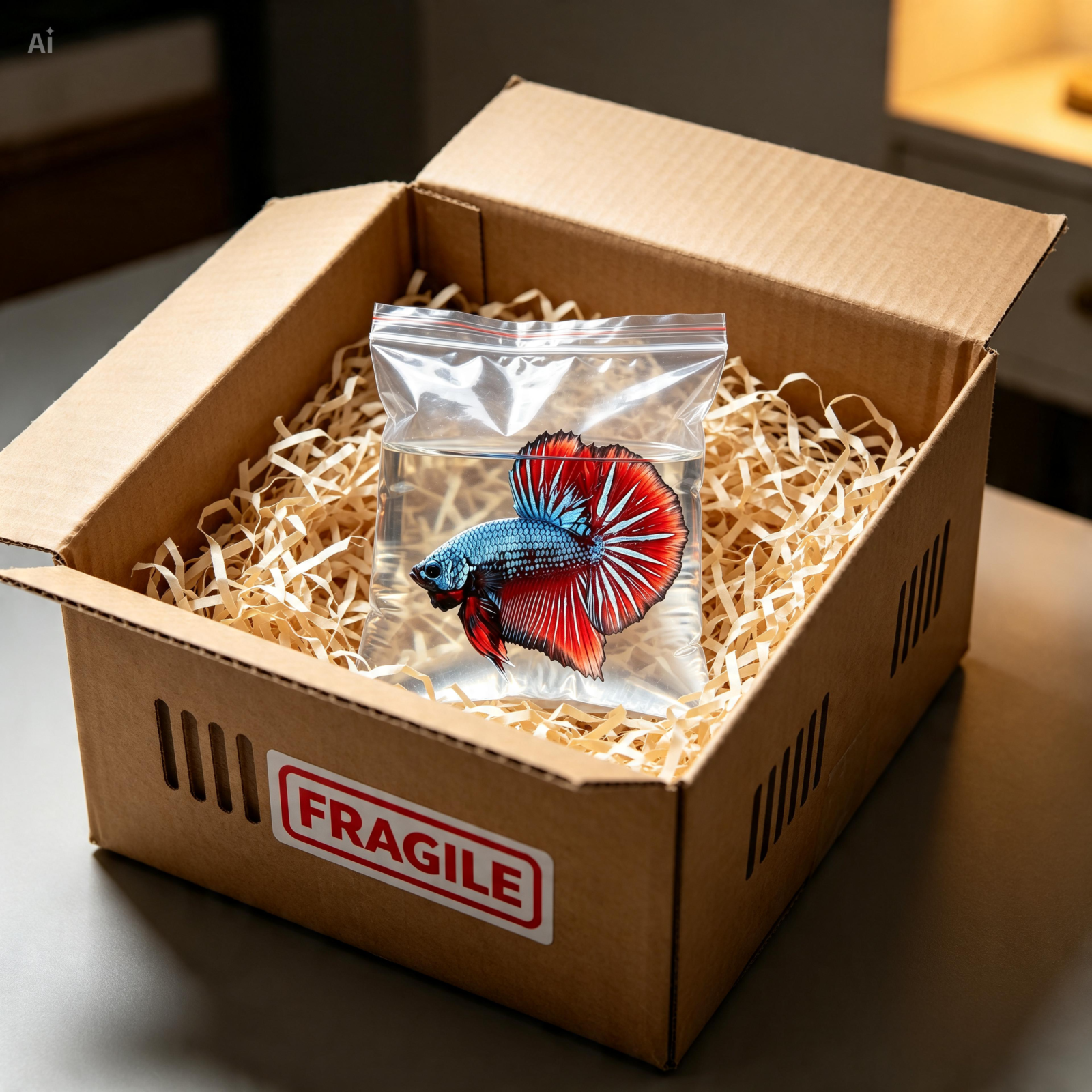
The good news is that fish stress during transportation can often be reduced with proper preparation.
The most important factors are not complicated. Good planning, appropriate packing, suitable transport water, stable temperature, adequate oxygen, gentle handling and careful acclimation can make a significant difference.
For betta fish keepers, this is particularly important when purchasing a new fish online or moving fish between homes, farms, shows or breeding facilities.
The World Organisation for Animal Health (WOAH) identifies transport as a potentially stressful experience for fish and emphasizes planning, suitable water quality, appropriate containers, competent handling and minimizing unnecessary movement.
At Betta4U, we believe that successful live-fish transportation does not end when the parcel arrives. The fish needs appropriate care before, during and after transportation.
This guide explains how to reduce fish stress during transportation and how to help a betta settle safely after a journey.
Why Does Transportation Stress Fish?
Fish are adapted to a particular aquatic environment.
When they are transported, several things change at the same time.
The fish may experience:
- Confinement
- Reduced swimming space
- Handling
- Vibration
- Darkness or unusual lighting
- Temperature changes
- Changes in water chemistry
- Reduced or changing oxygen availability
- Increasing carbon dioxide
- Increasing ammonia
- Delays
- Loading and unloading
- A completely unfamiliar environment after arrival
WOAH notes that fish welfare during transport is influenced by factors including water quality, stocking density, transport duration, temperature, oxygen and handling.
This means that reducing transportation stress is not simply about putting more oxygen into a bag.
It is about managing the whole journey.
What Causes Fish Stress During Transportation?
1. Poor Water Quality
Water quality can change surprisingly quickly inside a transport container.
Fish continue to breathe and produce waste while they are travelling.
Over time:
Fish respiration → CO₂ increases
Fish waste → Ammonia increases
If the journey is long or the fish density is too high, these changes can become more significant.
WOAH specifically identifies oxygen, carbon dioxide, ammonia, pH and temperature as important water-quality factors during fish transport.
2. Temperature Fluctuations
Temperature is another major consideration.
Sudden temperature changes can add stress to a fish that is already dealing with transportation.
This is especially important in tropical countries where parcels may be exposed to hot conditions during loading, delivery or storage.
A properly insulated shipping package can help reduce rapid temperature changes.
However, insulation should not be viewed as a guarantee that the temperature will remain safe under every condition.
Transport planning still matters.
3. Excessive Movement
A parcel that is repeatedly shaken, dropped or thrown can cause unnecessary disturbance.
WOAH recommends transporting fish in a way that minimizes uncontrolled movement because excessive movement can contribute to stress and injury.
This is one reason why secure packaging is important.
The goal is to prevent the fish container from moving excessively inside the outer package.
4. Handling
Every time a fish is caught, moved or exposed to air, there is another handling event.
Unnecessary handling increases disturbance.
WOAH guidance emphasizes minimizing handling and avoiding unnecessary exposure of fish to air during transfers.
For betta fish, gentle handling is especially important because their delicate fins can be damaged by rough nets, sharp equipment or careless transfers.
7 Ways to Reduce Fish Stress During Transportation
1. Choose a Healthy Fish Before Transport
One of the best ways to reduce transportation problems is to start with a fish that is fit for the journey.
Do not knowingly transport fish that are already showing significant signs of illness, injury or abnormal behavior unless transportation is specifically part of appropriate veterinary or biosecurity management.
WOAH guidance states that fish should be assessed for fitness before transport and identifies significant disease, injury and abnormal behavior as reasons a fish may not be suitable for transport.
Before shipping a betta, check:
- Appetite
- Swimming behavior
- Breathing
- Body condition
- Fins
- Skin and scales
- General activity
- Recent health history
A healthy fish generally has a better starting point for coping with a journey.
2. Prepare the Fish Properly
Preparation before shipping can influence what happens inside the transport container.
One important consideration is feeding.
Fish continue to produce waste after eating. During transportation, waste accumulation can contribute to deteriorating water quality.
WOAH recommends withholding feed before transport while taking the species and life stage into account.
However, there is no universal fasting period that should be blindly applied to every fish.
The appropriate preparation depends on:
- Species
- Age
- Size
- Health
- Journey duration
- Water volume
- Transport method
- Temperature
For valuable ornamental fish, preparation should be planned rather than improvised.
Do not assume that “more food before shipping” will help a fish cope with the journey.
3. Use Appropriate Transport Water
The water used for transportation should be suitable for the species and transport method.

Important considerations include:
- Temperature
- pH
- Dissolved oxygen
- Carbon dioxide
- Ammonia
- Water cleanliness
WOAH specifically recommends that transport water be appropriate for the species and transportation method.
For a betta, transport water should come from a clean and appropriate source.
Avoid introducing unnecessary contaminants or rapidly changing water chemistry immediately before shipping.
4. Provide Adequate Oxygen
Fish need oxygen throughout the journey.

The amount of oxygen required depends on factors such as:
- Fish species
- Fish size
- Number of fish
- Water temperature
- Transport duration
- Container size
WOAH’s recent scientific review highlights the relationship between oxygen demand, species, life stage, biomass, temperature and transport duration.
For many commercial live-fish shipments, oxygen-filled bags are used because they provide a large oxygen reserve above the water.
However, oxygen alone does not solve every transportation problem.
If too many fish are placed into too little water for too long, other problems such as ammonia and carbon dioxide can still develop.
5. Control Temperature
Temperature control should begin before the fish leaves the seller.
Think about the complete journey:
Farm → Packing area → Courier → Sorting facility → Delivery vehicle → Customer
Every stage can expose the fish to temperature changes.
Good transport planning should consider:
- Weather
- Journey duration
- Insulation
- Packaging
- Delivery timing
- Extreme heat
- Extreme cold
- Delays
WOAH recommends transport conditions and water temperature appropriate to the species and method of transport, with measures to reduce temperature fluctuations.
For betta fish, avoid exposing the package unnecessarily to direct sunlight or extreme heat.
6. Minimize Physical Movement
Good packaging should keep the transport container secure.
The outer package should protect against:
- Crushing
- Sharp impacts
- Excessive shaking
- Temperature extremes
- Accidental leakage
The fish itself should not be allowed to repeatedly collide with hard surfaces.
WOAH’s transport recommendations emphasize suitable containers and minimizing uncontrolled movement to reduce stress and injury.
For valuable bettas, the package should be designed around the fish—not simply around the cheapest shipping box.
7. Plan the Journey
Transportation should be planned before the fish is packed.
Consider:
- Distance
- Expected delivery time
- Weather
- Courier schedule
- Weekend delays
- Public holidays
- Potential sorting delays
- Emergency contacts
- Destination readiness
WOAH describes adequate planning as a key factor affecting fish welfare during transport and recommends considering route, duration, weather, equipment and contingency procedures.
For live fish, the shortest journey is not always the only goal.
A predictable, well-managed journey can be preferable to a theoretically shorter route with multiple unnecessary handling points or delays.
How Water Quality Changes During Transport
One of the most important concepts for live-fish shipping is that transport water is a changing environment.
Imagine a fish placed into a sealed transport bag.
The fish continues to:
- Consume oxygen
- Produce carbon dioxide
- Produce metabolic waste
At the same time, beneficial filtration is not operating in the same way as it does in an established aquarium.
This creates a changing water environment.
Oxygen
Oxygen can decrease as the fish respires.
Carbon Dioxide
Carbon dioxide increases as the fish respires.
Ammonia
Ammonia can increase as fish produce waste.
pH
Carbon dioxide accumulation can influence pH.
WOAH’s scientific review notes that CO₂ and ammonia can become important limiting factors during transport and that water quality is strongly influenced by transport duration, density and temperature.
This is why transport planning matters so much.
A transport bag is not a miniature aquarium. It is a temporary life-support environment.
How to Prepare a Betta Before Transportation
Whether you are a breeder, seller or hobbyist, preparation should be calm and organized.
Step 1: Check the Fish
Make sure the fish is active and fit for transportation.
Step 2: Prepare the Transport Materials
Have everything ready before catching the fish.
This may include:
- Appropriate fish bag
- Secure rubber bands
- Suitable transport water
- Oxygen supply where applicable
- Insulation
- Outer shipping box
- Absorbent material
- Labels
- Documentation
Step 3: Minimize Handling Time
Do not repeatedly catch and release the fish.
Prepare the bag and equipment first.
Step 4: Pack Carefully
Make sure the transport container is securely closed and protected inside the outer packaging.
Step 5: Dispatch Strategically
Avoid shipping when predictable delays or extreme weather could create unnecessary risk.
How to Pack a Betta Fish Safely
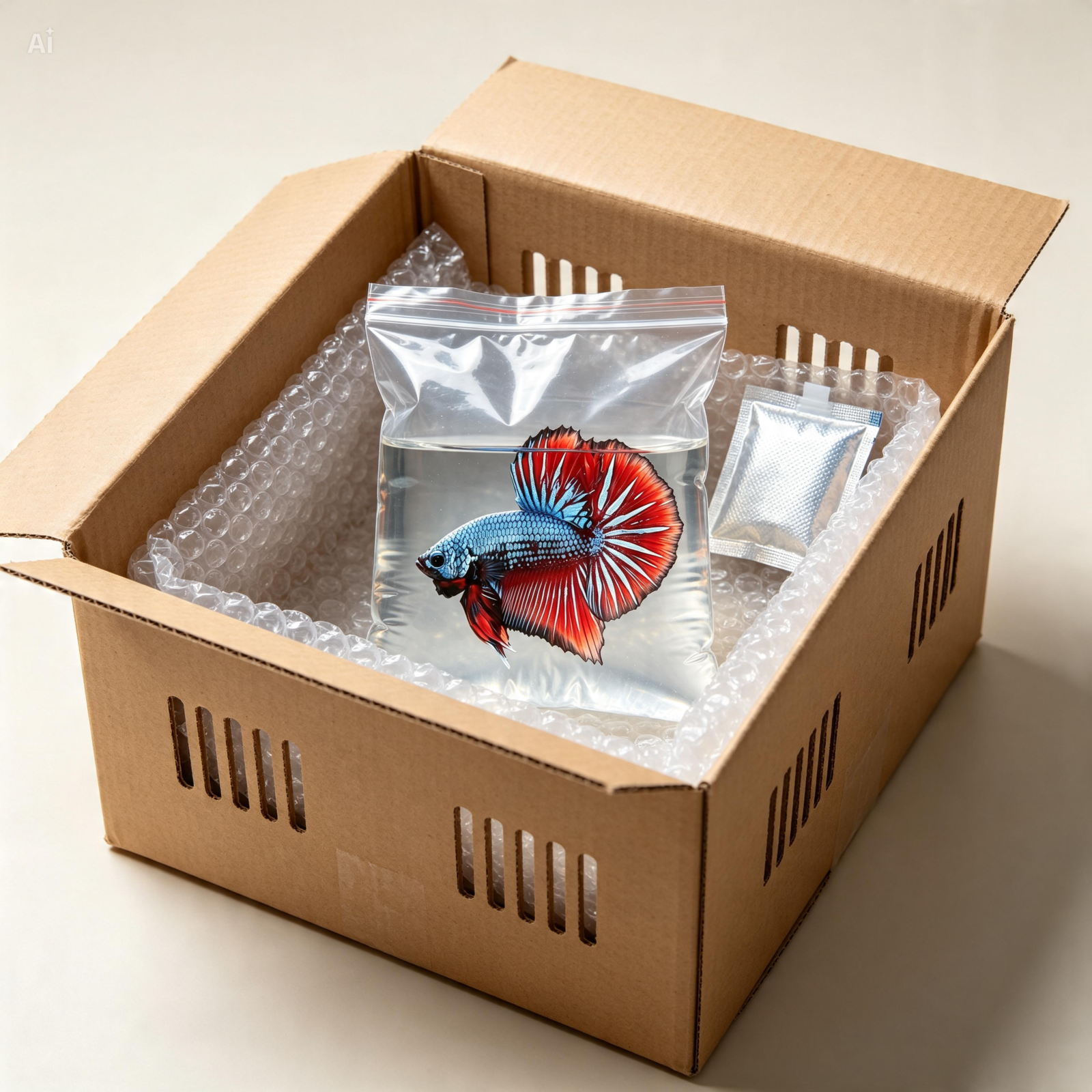
A professional live-fish package generally has several layers of protection.
Inner Layer
The fish is placed inside an appropriate transport container.
The container must be securely sealed.
Protection Layer
The inner package should be protected from puncture and excessive movement.
Insulation Layer
Suitable insulation can help reduce rapid temperature changes.
Outer Layer
A strong outer carton protects the shipment during handling.
The objective is:
Containment + Oxygen + Temperature Stability + Physical Protection
No single component is enough by itself.
What to Do When Your Betta Arrives
The journey does not end when you open the box.
The first few minutes can affect how well the fish settles into its new environment.
1. Open the Package Carefully
Move the fish to a quiet area away from direct sunlight and excessive noise.
2. Check the Fish
Observe:
- Swimming
- Breathing
- Body condition
- Fins
- Color
- General responsiveness
Do not panic if the fish appears less active immediately after a long journey.
Transportation can temporarily affect behavior.
3. Equalize Temperature
If the transport water and aquarium water have different temperatures, allow them to equalize gradually.
Merck Veterinary Manual recommends floating a transport bag for approximately 20–30 minutes to allow temperature equalization when introducing a new fish. It also advises not to introduce transport water into the aquarium.
4. Avoid Pouring Transport Water Into the Aquarium
Transfer the fish carefully without adding the shipping water to your established aquarium.
This reduces the chance of introducing unwanted contaminants or pathogens.
Merck specifically recommends keeping transport water out of the aquarium when introducing a new fish.
5. Keep the Environment Calm
Dim lighting can help reduce stimulation during the initial settling period.
Avoid repeatedly catching, touching or photographing the fish immediately after arrival.
Let the fish rest.
Signs of Transport Stress
A stressed fish may temporarily show changes in behavior.
Possible signs include:
- Hiding
- Reduced activity
- Clamped fins
- Reduced appetite
- Pale or darker coloration
- Unusual swimming
- Rapid breathing
- Remaining near the bottom
- Remaining near the surface
These signs are not specific to transportation stress.
They can also indicate:
- Poor water quality
- Temperature problems
- Disease
- Injury
- Oxygen problems
- Acclimation issues
Therefore, do not automatically assume that every abnormal behavior is simply “shipping stress.”
Check the aquarium environment.
If the fish shows persistent or severe abnormal signs, seek advice from an appropriately qualified aquatic veterinarian or fish-health professional.
How Long Does Fish Stress Last After Transportation?
There is no universal recovery time.
A healthy fish may begin behaving normally relatively quickly, while a fish that experienced a long or difficult journey may need more time.
Recovery depends on:
- Journey duration
- Temperature
- Water quality
- Handling
- Fish health before transport
- Species
- Age
- Individual condition
- Quality of acclimation
The best approach is to provide:
Clean water + stable temperature + low disturbance + appropriate food + observation
Avoid trying to “force” the fish to recover by adding multiple products or repeatedly handling it.
Common Mistakes When Transporting Fish
Mistake 1: Feeding Too Much Before Shipping
More food can mean more waste during transport.
Better approach:
Plan feeding around the transport method and duration.
Mistake 2: Ignoring Weather
Extreme heat can turn a shipping box into a dangerous environment.
Better approach:
Check weather conditions and courier schedules before dispatch.
Mistake 3: Overpacking Fish
More fish in one container means greater competition for oxygen and faster waste accumulation.
Better approach:
Use species-appropriate stocking densities.
Mistake 4: Poor Packaging
A bag may be properly sealed but still vulnerable to crushing or puncture.
Better approach:
Use multiple layers of protection.
Mistake 5: Rough Handling
Repeated catching and netting can increase stress and physical injury.
Better approach:
Prepare everything first and minimize handling.
Mistake 6: Adding Shipping Water to the Aquarium
Transport water may contain accumulated waste and contaminants.
Better approach:
Transfer the fish without adding transport water to the aquarium.
Mistake 7: Feeding Immediately
A newly transported betta may not be ready to eat immediately.
Better approach:
Allow the fish to settle and offer an appropriate amount of food once it is calm and responsive.
Common Myths About Fish Transportation
| Myth | Fact |
|---|---|
| Fish do not get stressed during shipping. | Transportation can be stressful because of handling, confinement, movement and environmental changes. |
| More oxygen solves every shipping problem. | Oxygen is important, but ammonia, CO₂, temperature and density also matter. |
| A fish that is alive on arrival has had no transport stress. | Fish can experience physiological and behavioral stress even when they survive the journey. |
| More insulation is always better. | Insulation helps control temperature but does not replace proper planning and monitoring. |
| Feed the fish heavily before shipping. | Excess food can contribute to waste accumulation during transport. |
| Open the bag immediately and release the fish. | Temperature differences can cause additional stress; gradual temperature equalization may be appropriate. |
| Add the shipping water to the tank. | Transport water should generally not be introduced into an established aquarium. |
| A stressed fish always needs medication. | First check water quality, temperature, acclimation and other environmental factors. |
Frequently Asked Questions
1. Why do fish become stressed during transportation?
Fish can experience stress from confinement, handling, vibration, temperature changes, water-quality changes, limited space and unfamiliar surroundings.
During transportation, oxygen, carbon dioxide and ammonia can also change. The longer and more demanding the journey, the more important proper preparation becomes.
WOAH recommends planning transport around fish welfare, water quality, temperature, oxygen, handling and journey conditions.
2. How can I reduce fish stress during transportation?
Start with a healthy fish, prepare the transport container properly, avoid unnecessary feeding, maintain appropriate water quality, provide adequate oxygen, protect the fish from temperature extremes and minimize physical movement.
After arrival, acclimate the fish appropriately and provide a quiet environment.
3. How should I transport a betta fish?
For a single betta, use an appropriate fish-transport bag or container with suitable water and adequate gas exchange/oxygen for the planned journey. Secure the container against leakage and physical damage, and use suitable insulation when temperature fluctuations are a concern.
The exact packing method should reflect journey duration, weather, courier conditions and the fish’s size and condition.
4. Should I feed my betta before shipping?
Feeding should be planned rather than done immediately before transportation.
Fish produce waste after feeding, and waste accumulation can contribute to declining transport-water quality. WOAH recommends withholding feed before transport while considering species and life stage.
Do not apply one rigid fasting period to every fish or journey.
5. Should I add water conditioner to transport water?
Transport water should be appropriate for the species and method of transportation.
If a water conditioner is required, use a product specifically according to its label instructions and ensure the water is suitable before the fish is packed.
Avoid experimenting with unfamiliar products immediately before a long journey.
6. Why is my betta not moving much after shipping?
A betta may temporarily become less active after transportation because the journey itself can be stressful.
However, inactivity can also indicate temperature problems, poor water quality, oxygen problems or disease.
Check the aquarium temperature and water quality first and give the fish a calm environment.
If the fish shows severe or persistent abnormal signs, seek qualified fish-health advice.
7. How long should I acclimate a betta after shipping?
Temperature equalization is important when the transport water and aquarium water differ.
Merck Veterinary Manual recommends floating the transport bag for approximately 20–30 minutes when introducing a new fish to allow the temperature to equalize.
The exact acclimation approach should also consider differences in water chemistry and the condition of the fish.
8. Can I pour shipping water into my aquarium?
It is better not to.
Transport water can contain accumulated waste and may carry organisms you do not want to introduce to your aquarium.
Merck specifically advises not to introduce water from the transport bag into the aquarium.
9. Is overnight shipping better for betta fish?
A shorter journey can reduce the time the fish spends in a transport container, but shipping speed is only one factor.
A well-planned route with fewer delays, appropriate handling and suitable temperature conditions may be more important than the advertised delivery speed alone.
Always consider the complete logistics chain.
10. What should I do if my betta arrives stressed?
Keep the fish in a suitable, stable aquarium environment.
Check:
- Temperature
- Ammonia
- Nitrite
- pH
- Filtration
- Water conditioning
Minimize handling and excessive disturbance.
Do not immediately use multiple medications or supplements simply because the fish looks stressed.
Give the fish time to settle while closely observing its condition.
Betta4U Tips for Safer Live Fish Transportation
For buyers purchasing live bettas online, there are several things you can do as soon as your fish arrives.
Before Ordering
Check:
- Seller’s shipping method
- Estimated delivery time
- Weather conditions
- Live-arrival policy
- Acclimation instructions
- Whether the seller uses appropriate packaging
Before the Fish Arrives
Prepare:
- Clean aquarium
- Conditioned water
- Appropriate temperature
- Working filtration
- Thermometer
- Quiet location
When the Fish Arrives
Remember:
Open carefully → Inspect → Equalize temperature → Transfer fish → Keep calm → Observe
Avoid turning the first few hours into a photo session.
Your new betta needs time to settle.
Recommended Betta4U Products
Good transportation starts with good preparation, but products should support—not replace—proper fishkeeping practices.
Betta4U Anti-Chlorine
Useful when preparing tap water for the aquarium after the fish arrives. Always follow the product’s label dosage.
Betta4U Booster
A mineral and vitamin supplement designed to complement regular betta care. It should not be considered a substitute for stable water quality, nutrition or proper acclimation.
Betta4U Protection
Can be incorporated into a broader aquarium-care routine according to the product’s directions.
Betta4U Black Dust (Instant Blackwater)
A concentrated blackwater extract that can be used when creating a tannin-rich aquarium environment.
Betta4U Pati Ketapang Booster
A Ketapang-based aquarium supplement with tannins and added vitamins and minerals. Use according to the product instructions.
Explore the Betta4U aquarium care products and water conditioners for products that can support your betta’s aquarium after transportation.
Authoritative External References
| Website | Refer |
| World Organisation for Animal Health (WOAH) | International animal-health and fish-welfare guidance |
| WOAH – Welfare of Farmed Fish During Transport | Transport planning, water quality, handling and fish welfare |
| WOAH – Scientific Review of Fish Welfare During Transport | Scientific discussion of water quality, oxygen, ammonia, CO₂ and temperature during transport |
| Merck Veterinary Manual – Providing a Home for Fish | Fish acclimation and introduction after transportation |
| WOAH – Aquatic Animal Health Risks Associated With Transport | Biosecurity considerations associated with aquatic animal transportation |
Fish Care Guides
- Complete Guide to Betta Fish Care
- How to Prepare Blackwater for Betta Fish
- Aquarium Water Change Guide
- Common Betta Fish Diseases
- Beginner’s Guide to Aquarium Water Quality