

Jul
Aquatic Health and Diseases, MAA Blog
10 Common Betta Fish Diseases: Symptoms, Causes & Treatment Guide (2026)
10 Common Betta Fish Diseases and How to Treat Them
Betta fish diseases are one of the biggest concerns for aquarium hobbyists. Learning to identify common Betta fish diseases early can help prevent serious health problems and improve your fish’s chance of recovery. In this complete guide, we’ll cover the 10 most common Betta fish diseases, their symptoms, causes, treatments, and practical prevention tips to keep your Betta healthy.
Early diagnosis is the key to successful treatment. This guide explains the 10 most common Betta fish diseases, how to recognize them, and the best treatment methods to help your fish recover quickly.
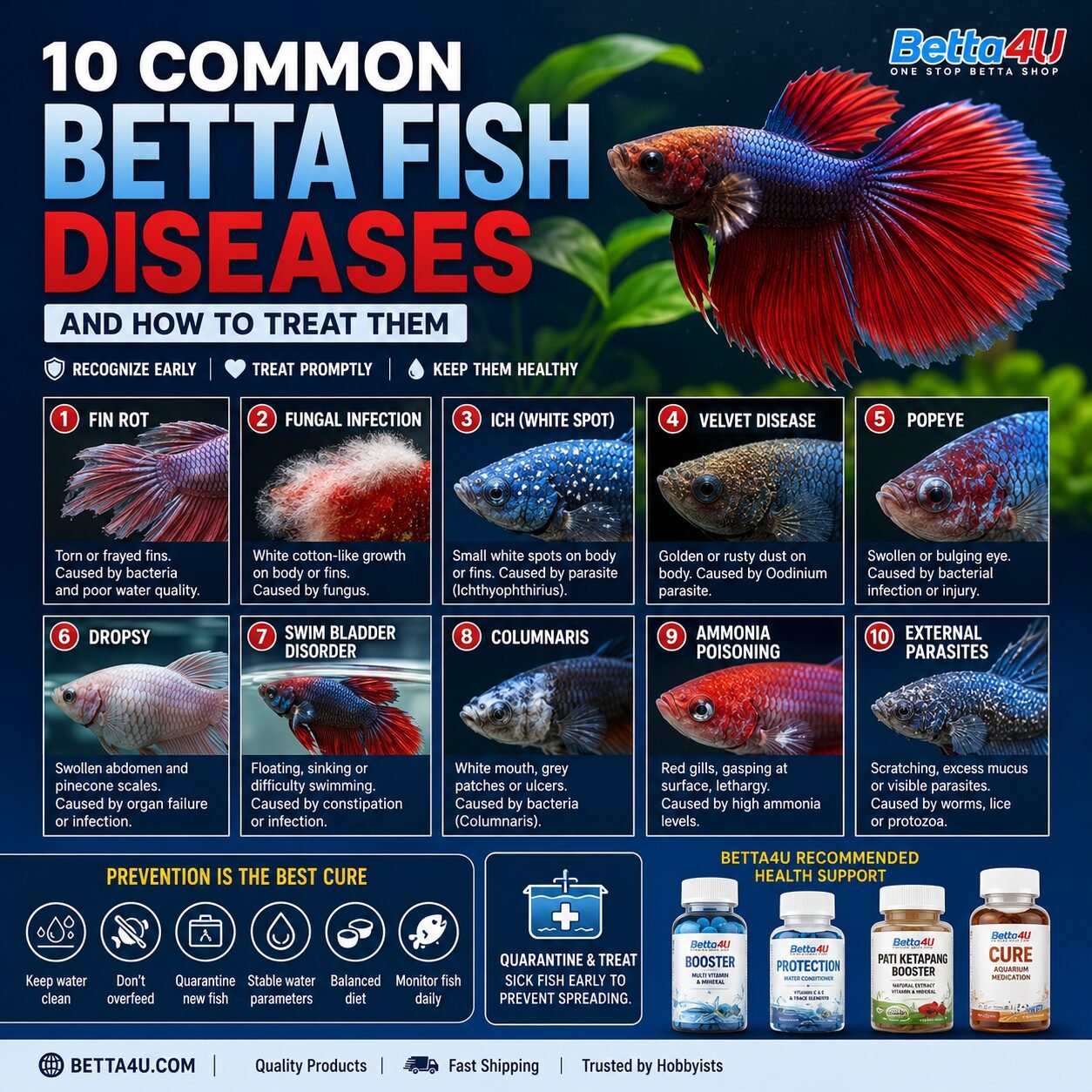
Why Understanding Betta Fish Diseases Is Important
Every Betta owner should understand the warning signs of Betta Fish Diseases before they become life-threatening. Many illnesses begin with subtle symptoms such as loss of appetite, clamped fins, faded colours, or unusual swimming behaviour. Recognizing Betta Fish Diseases early allows you to isolate affected fish, improve water quality, and begin the correct treatment sooner, greatly increasing the chance of a successful recovery.
1. Fin Rot
Symptoms
- Torn fins
- Frayed edges
- Black or white fin margins
- Fins gradually disappear
Causes
- Poor water quality
- Bacterial infection
- Stress
- Injuries from fighting
Treatment
- Perform regular water changes.
- Remove uneaten food.
- Improve water quality.
- Use an appropriate antibacterial medication if symptoms worsen.
2. Fungal Infection
Symptoms
- White cotton-like patches
- Fuzzy growth on body or fins
- Loss of appetite
Causes
- Injuries
- Poor water quality
- Stress
Treatment
- Isolate infected fish.
- Maintain clean water.
- Use antifungal medication according to the manufacturer’s instructions.
3. Ich (White Spot Disease)
Symptoms
- Tiny white spots
- Rubbing against decorations
- Rapid breathing
- Clamped fins
Causes
- Ich parasite
- Sudden temperature changes
- Stress
Treatment
- Raise water temperature gradually (when appropriate for your setup).
- Increase aeration.
- Treat with an Ich-specific medication.
For more information about Ich (White Spot Disease), refer to the Aquarium Co-op Fish Disease Guide.
4. Velvet Disease
Symptoms
- Gold or rusty dust on the body
- Scratching against objects
- Loss of colour
- Difficulty breathing
Causes
- Oodinium parasite
Treatment
- Keep the aquarium dark during treatment.
- Improve water quality.
- Use medication formulated for Velvet disease.
5. Popeye
Symptoms
- One or both eyes swollen
- Cloudy eye
- Reduced activity
Causes
- Bacterial infection
- Injury
- Poor water conditions
Treatment
- Perform water changes.
- Maintain stable water parameters.
- Use antibacterial treatment if necessary.
6. Dropsy
Symptoms
- Bloated abdomen
- Pinecone-like scales
- Lethargy
- Loss of appetite
Causes
- Internal bacterial infection
- Organ failure
Treatment
Dropsy is often difficult to cure once advanced. Early detection and excellent water quality provide the best chance of recovery.
7. Swim Bladder Disorder
Symptoms
- Floating sideways
- Sinking
- Difficulty swimming
- Loss of balance
Causes
- Constipation
- Overfeeding
- Bacterial infection
Treatment
- Fast the fish for 24–48 hours.
- Feed easily digestible foods afterwards.
- Maintain excellent water quality.
8. Columnaris
Symptoms
- White mouth
- Grey patches
- Skin ulcers
- Rapid breathing
Causes
- Flavobacterium bacteria
Treatment
Immediate treatment is important. Improve water quality and use appropriate antibacterial medication.
9. Ammonia Poisoning
Symptoms
- Red gills
- Gasping at the surface
- Lethargy
- Loss of appetite
Causes
- High ammonia levels
- Poor filtration
- Overfeeding
Treatment
- Test water immediately.
- Perform partial water changes.
- Improve biological filtration.
10. External Parasites
Symptoms
- Flashing
- Excess mucus
- Small worms
- Visible parasites
Causes
- New fish
- Contaminated plants
- Infected aquarium equipment
Treatment
Quarantine new fish before introducing them to your aquarium and use appropriate anti-parasite medication when required.
Early Detection of Betta Fish Diseases
The earlier you identify Betta Fish Diseases, the easier they are to treat. Observe your fish every day for changes in colour, appetite, fin condition, breathing, and swimming behaviour. Early detection not only improves treatment success but also helps prevent diseases from spreading to other fish in your aquarium.
How to Prevent Betta Fish Diseases
Prevention is always better than treatment.
Follow these simple practices:
- Maintain stable water parameters.
- Perform regular water changes.
- Avoid overfeeding.
- Quarantine new fish.
- Keep aquarium equipment clean.
- Avoid overcrowding.
- Feed a balanced diet.
- Monitor fish daily for unusual behaviour.
Healthy water is the most important factor in preventing disease.
The Merck Veterinary Manual provides additional veterinary information on common fish diseases and aquatic animal care.
Recommended Betta4U Products
To help maintain a healthier aquarium, consider these trusted Betta4U products:
Betta4U Booster
A premium blend of vitamins and minerals that supports growth, immunity and overall fish vitality.
👉 https://betta4u.com/product/betta4u-booster/
Betta4U Pati Ketapang Booster
Natural concentrated Ketapang extract enriched with vitamins and minerals to help create a more natural blackwater environment for Betta fish.
👉 https://betta4u.com/product/pati-ketapang-booster/
Betta4U Protection
Daily aquarium water conditioner formulated to support cleaner water and healthier ornamental fish.
👉 https://betta4u.com/product/betta4u-protection/
Fish Medication Collection
Browse our complete range of fish medications and aquarium treatments.
👉 https://betta4u.com/product-category/fish-medication/
When Should You Quarantine a Sick Betta?
A hospital tank helps reduce stress on healthy fish while allowing targeted treatment.
You should quarantine your Betta if you notice:
- White spots
- Cotton-like fungus
- Torn fins
- Swollen eyes
- Loss of appetite
- Difficulty swimming
- Parasites
- Open wounds
Early isolation often increases the chance of successful recovery.
Frequently Asked Questions
How do I know if my Betta is sick?
Common warning signs include loss of appetite, clamped fins, unusual swimming, faded colours, rapid breathing, white spots, fuzzy growths, or swollen eyes. Any sudden change in behaviour is worth investigating.
Can poor water quality cause diseases?
Yes. Poor water quality is one of the leading causes of stress and disease in Betta fish. Regular maintenance and water testing are essential for long-term health.
Should I quarantine new fish?
Absolutely. Quarantining new fish for at least 2–4 weeks helps reduce the risk of introducing parasites or infectious diseases into your main aquarium.
Can all Betta diseases be cured?
Not all diseases are curable, especially if detected late. Early diagnosis, prompt treatment, and good water quality greatly improve the chances of recovery.
What are the most common Betta Fish Diseases?
The most common Betta Fish Diseases include Fin Rot, Ich (White Spot Disease), Velvet Disease, Fungal Infection, Dropsy, Popeye, Swim Bladder Disorder, Columnaris, Ammonia Poisoning, and External Parasites. Early diagnosis and proper treatment are essential for the best recovery.
Conclusion
Understanding Betta Fish Diseases is an important part of responsible fish keeping. By maintaining excellent water quality, feeding a balanced diet, and recognizing the early signs of Betta Fish Diseases, you can protect your fish from many common health problems. At Betta4U, we’re committed to helping hobbyists care for healthier, happier Betta fish with quality products and expert advice.
References & Further Reading
For additional information on fish health, aquarium diseases, and responsible fish care, visit these trusted resources:
- Merck Veterinary Manual – Diseases of Fish
https://www.merckvetmanual.com/exotic-and-laboratory-animals/fish - Aquarium Co-op – Fish Disease Guide
https://www.aquariumcoop.com/blogs/aquarium/fish-disease - World Organisation for Animal Health (WOAH) – Aquatic Animal Health
https://www.woah.org/en/what-we-do/animal-health-and-welfare/aquatic-animal-health/ - Wikipedia – Methylene Blue
https://en.wikipedia.org/wiki/Methylene_blue