

Aug
MAA Blog, Aquatic Life Care
Beginner’s Guide to Aquarium Water Quality: 7 Essential Tips for Healthy Betta Fish
Introduction
When a betta fish looks sick, many beginners immediately think about disease or medication. However, one of the first things worth checking is something much less visible: aquarium water quality.
Your betta lives in its water 24 hours a day. The water is not simply where the fish swims—it is also the environment surrounding its gills, skin and fins. Poor water conditions can create stress and make fish more vulnerable to health problems.
The good news is that maintaining good aquarium water quality does not have to be complicated.
You do not need to become a water chemistry expert. By understanding a few important parameters—especially ammonia, nitrite, nitrate, pH and temperature—you can make much better decisions about your aquarium.
For beginners, the most important principle is simple:
Stable, clean and properly conditioned water is more important than chasing a “perfect” number.
Betta care guidance from veterinary sources emphasizes stable, clean water, appropriate temperature, gentle filtration and regular testing.
This beginner’s guide explains what you need to know and gives you a simple routine for keeping your betta tank healthier.
What Is Aquarium Water Quality?
Aquarium water quality refers to the physical and chemical condition of the water in your fish tank.
Several factors work together to determine whether the environment is suitable for fish.
The most important factors for a beginner to understand are:
| Parameter | What It Tells You | Why It Matters |
|---|---|---|
| Temperature | How warm the water is | Affects metabolism and overall comfort |
| pH | How acidic or alkaline the water is | Influences fish physiology and ammonia toxicity |
| Ammonia | Waste-related nitrogen compound | Toxic to fish |
| Nitrite | Intermediate nitrogen compound | Toxic to fish |
| Nitrate | End product of biological filtration | Less toxic but can accumulate |
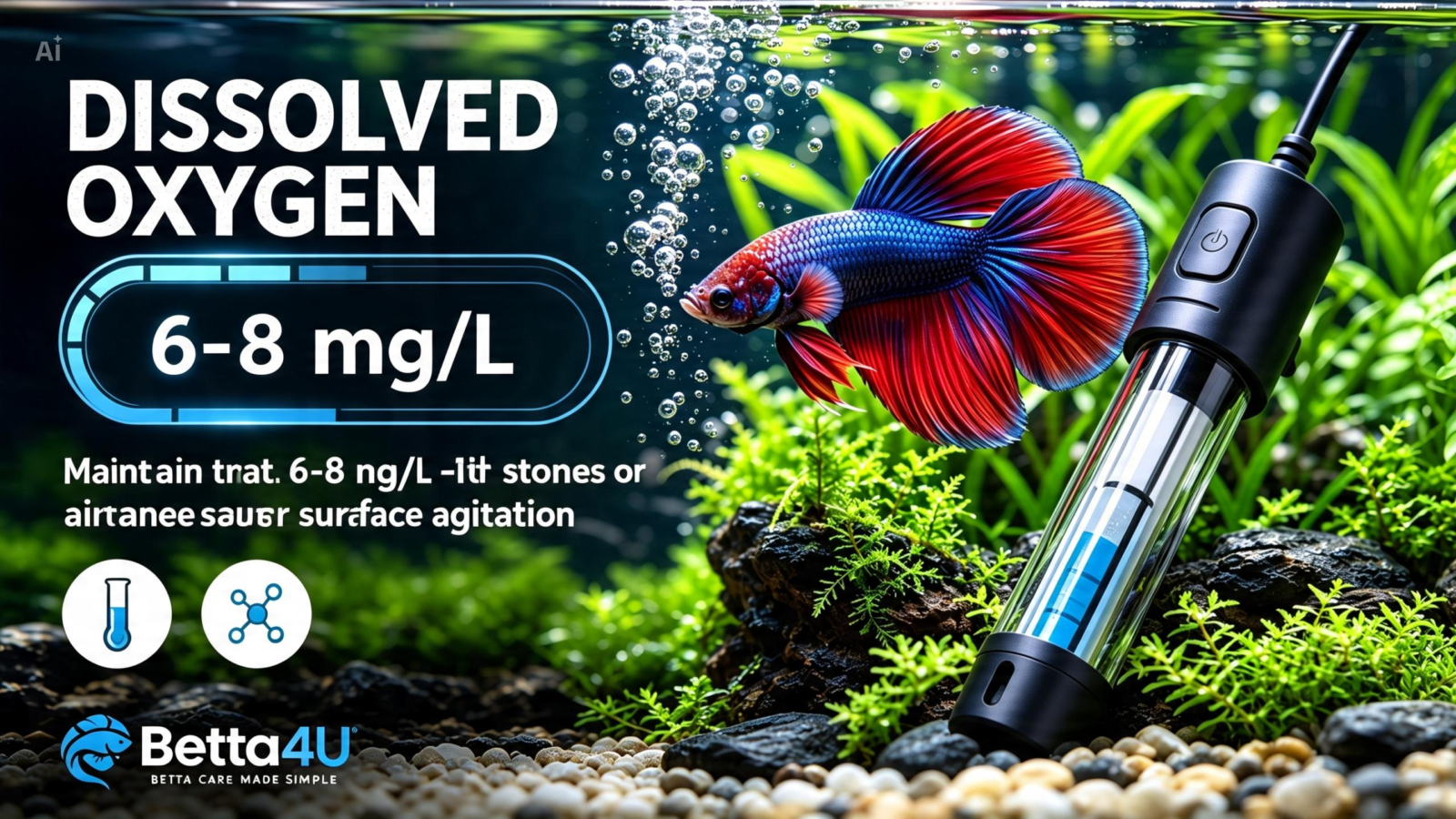
| Dissolved oxygen | Oxygen available in water | Essential for fish and beneficial bacteria |
| Chlorine/Chloramine | Disinfectants in tap water | Can harm fish and beneficial bacteria |
Merck Veterinary Manual identifies temperature, pH, dissolved oxygen, ammonia and nitrite among important aquarium water-quality parameters to monitor.
Good water is therefore not simply clear water.
A tank can look crystal clear while still containing dangerous ammonia or nitrite.
Clear water does not necessarily mean healthy water. Always test when something seems wrong.
Why Water Quality Matters for Betta Fish
Betta fish are tropical freshwater fish. They can be excellent beginner pets when their aquarium is properly established and maintained. Veterinary guidance recommends stable water conditions, warm temperatures and appropriate filtration for bettas.
Poor water quality can stress fish.
Stress does not always appear immediately. A betta may continue swimming and eating while water conditions gradually deteriorate.
Problems can become more obvious when:
- The aquarium is newly established.
- Too much food is added.
- Uneaten food is left in the tank.
- Fish waste accumulates.
- The filter is not functioning properly.
- The aquarium is overcrowded.
- Water changes are neglected.
- Tap water is added without appropriate conditioning.
- Beneficial bacteria are damaged or removed.
Water quality is especially important in a new aquarium because the biological filtration system may not yet be fully established. Merck describes new tank syndrome as a common water-quality problem associated with elevated ammonia and/or nitrite during the early life of an aquarium.
5 Important Aquarium Water Parameters
1. Ammonia
Ammonia is one of the most important things to understand when keeping fish.
Fish release ammonia as part of normal metabolism. Additional ammonia can come from decomposing food, dead plant material and other organic waste.
Beneficial bacteria help process ammonia through the nitrogen cycle.
The important beginner rule is:
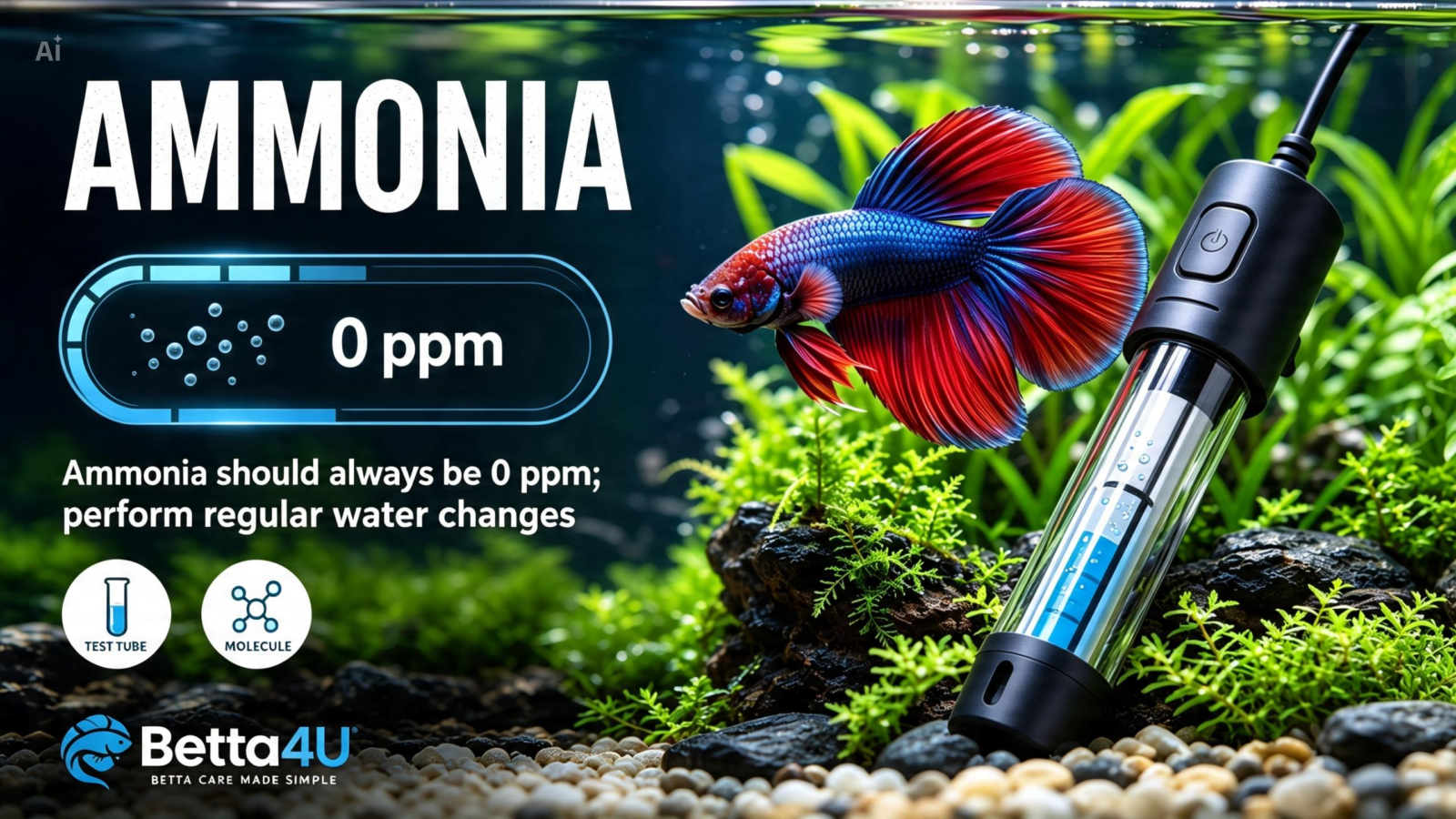
Ammonia should be undetectable in a properly functioning, established aquarium.
Do not assume that because your water looks clean, ammonia is safe.
If ammonia is detected, investigate the cause rather than simply adding more products.
Possible causes include:
- Overfeeding
- Too many fish
- New aquarium
- Dead fish or plant material
- Dirty filter media
- Insufficient biological filtration
- Filter failure
Ammonia toxicity is also affected by factors such as pH and temperature. A higher pH and higher temperature increase the proportion of total ammonia present as the more toxic un-ionized form.
2. Nitrite
Nitrite is another nitrogen compound produced during the aquarium nitrogen cycle.
Beneficial bacteria convert ammonia into nitrite, and another group of bacteria converts nitrite into nitrate.
The problem is that nitrite is toxic to fish.
Merck explains that nitrite can interfere with the blood’s ability to transport oxygen, making elevated nitrite a serious water-quality concern.
For a healthy established aquarium:
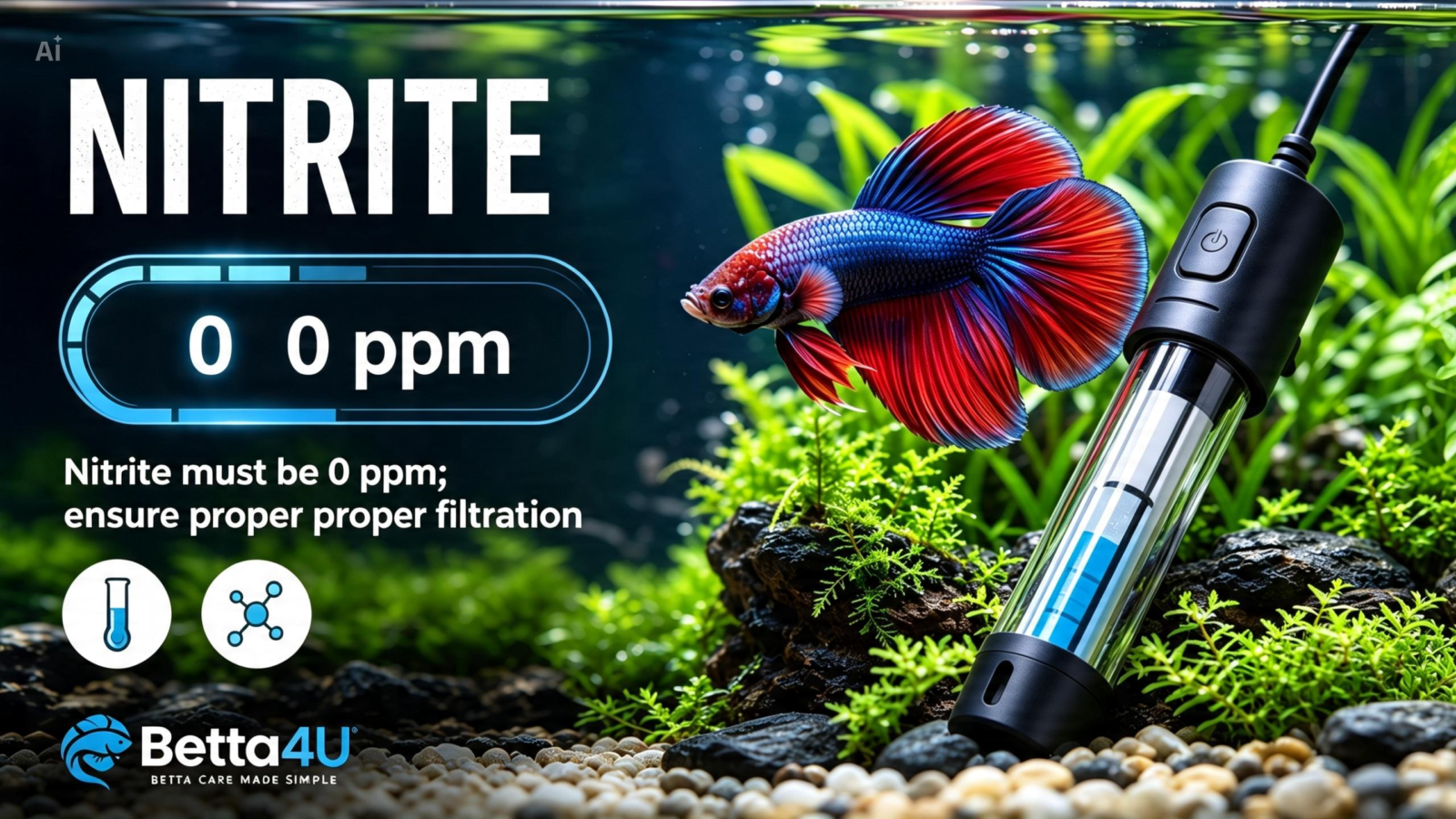
Nitrite should also be undetectable.
If your test shows nitrite, check:
- Whether the aquarium is fully cycled.
- Whether the fish are being overfed.
- Whether the filter is working correctly.
- Whether filter media has recently been replaced or aggressively cleaned.
- Whether too much organic waste is present.
3. Nitrate
Nitrate is produced later in the nitrogen cycle.
Compared with ammonia and nitrite, nitrate is generally much less toxic to fish, but it should not be allowed to accumulate indefinitely.
Regular water changes help remove nitrate from the aquarium.
Live plants can also use nitrate as a nutrient, although plants should not be treated as a substitute for proper aquarium maintenance.
Merck notes that nitrate accumulates when water is not exchanged regularly and can become harmful at sufficiently high concentrations.
The practical lesson is simple:
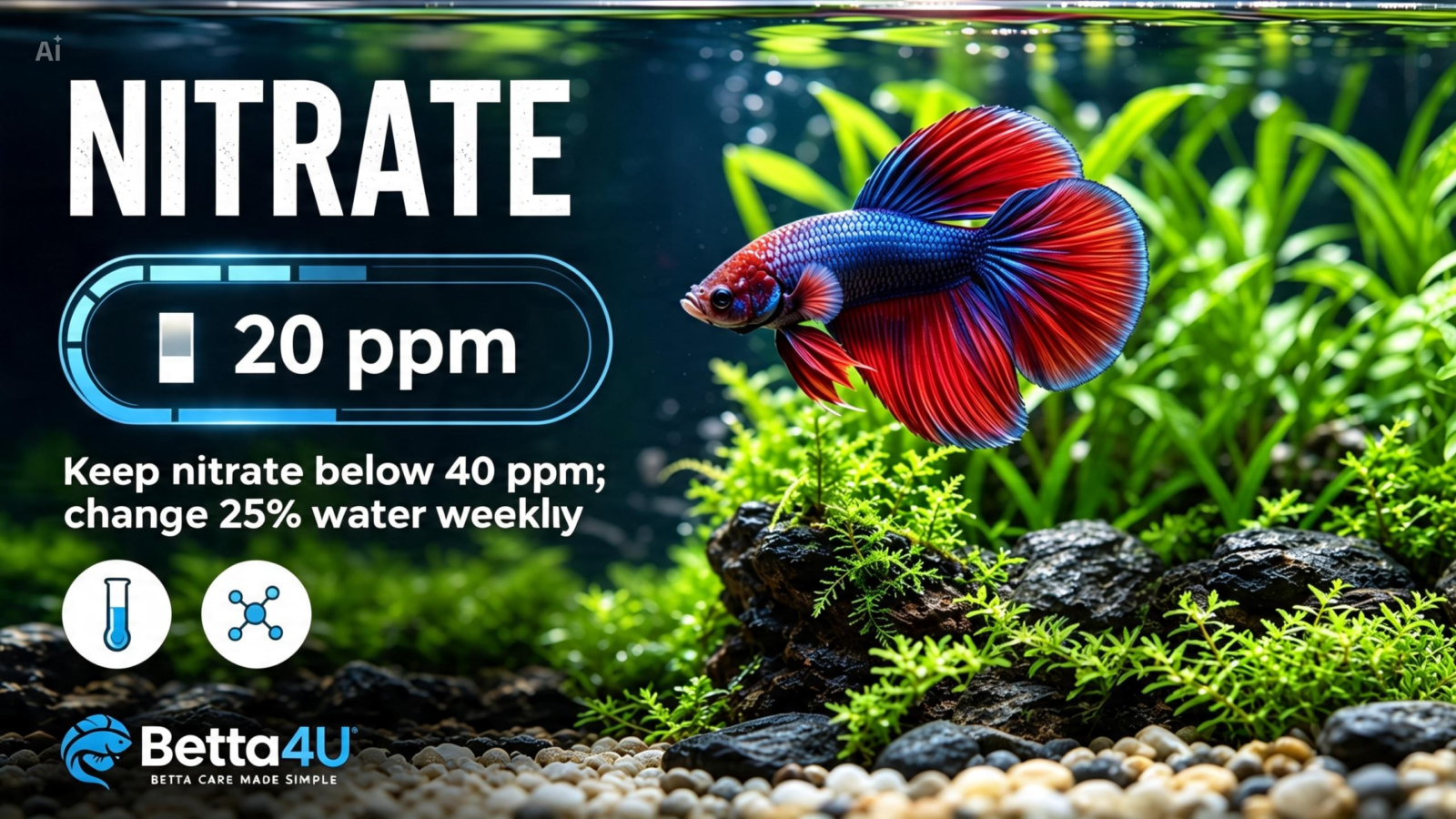
Ammonia and nitrite should be zero in an established tank, while nitrate should be monitored and controlled through maintenance.
4. pH
pH measures how acidic or alkaline water is.
The pH scale runs from acidic to alkaline, with 7 generally considered neutral.
For bettas, veterinary guidance commonly places a suitable range around pH 6.5–7.8, with a value near 7 being a useful target. More importantly, stability matters.
Avoid repeatedly adding chemicals simply to force the pH to a particular number.
A stable pH that is reasonably suitable for your fish is generally preferable to constantly making large adjustments.
Rapid changes can create additional stress.
What can affect aquarium pH?
- Tap water
- Biological activity
- Carbonate hardness
- Organic material
- Water changes
- Certain rocks and substrates
- Driftwood
- Botanical materials
- Some aquarium additives
If your pH changes significantly, investigate why it is changing before trying to correct it.
5. Temperature
Betta fish are tropical fish and need warm, stable water.
PetMD’s current betta care guidance gives a range of approximately 76–81°F (24.4–27.2°C) and emphasizes stability rather than constantly chasing a particular temperature.
Use an aquarium thermometer instead of relying on room temperature.
Temperature also influences biological and chemical processes in an aquarium. FAO explains that temperature affects fish metabolism, oxygen demand and other important biological processes.
A reliable heater and thermometer are therefore useful equipment for a betta aquarium.
Understanding the Aquarium Nitrogen Cycle
The nitrogen cycle is one of the most important concepts for every beginner.
Think of it as your aquarium’s natural waste-processing system.
Step 1: Fish Produce Waste
Fish produce waste and release ammonia.
Uneaten food and decomposing organic matter can also contribute ammonia.
Step 2: Beneficial Bacteria Process Ammonia
Certain microorganisms convert ammonia into nitrite.
Step 3: Other Bacteria Process Nitrite
Another group of microorganisms converts nitrite into nitrate.
Step 4: Water Changes Remove Nitrate
Nitrate can accumulate over time, so routine water changes help control it.
Live plants can also take up nitrogen compounds as they grow.
The simplified cycle is:
Fish waste → Ammonia → Nitrite → Nitrate → Water change / plant uptake
Merck describes this biological process and explains why a functioning biofilter is important for aquarium health.
Why New Tanks Can Be Dangerous
A brand-new aquarium does not automatically have enough beneficial bacteria to process fish waste efficiently.
This is why aquarium cycling is so important.
Merck reports that establishing a biofilter in a tropical fish aquarium can take several weeks, and recommends monitoring ammonia, nitrite and nitrate during cycling.
A simple rule for beginners
Do not assume a new tank is ready simply because the water looks clear.
Test it.
Common Aquarium Water Quality Problems
Problem 1: Ammonia Spike
Possible causes:
- New tank
- Overfeeding
- Excess waste
- Dead organic matter
- Too much livestock
- Biological filtration problem
What to do:
Test the water, reduce feeding temporarily if appropriate, remove obvious waste, check filtration and perform an appropriate partial water change with properly conditioned replacement water.
Problem 2: Nitrite Spike
Nitrite often indicates that the nitrogen cycle is not yet processing waste effectively.
Check:
- Aquarium age
- Filter operation
- Feeding
- Stocking level
- Recent filter cleaning
- Recent medication or chemical treatment
Problem 3: High Nitrate
High nitrate usually indicates that waste has been accumulating faster than it is being removed.
Common causes include:
- Infrequent water changes
- Overfeeding
- Heavy stocking
- Excess organic waste
The solution is usually better aquarium maintenance rather than repeatedly adding corrective chemicals.
Problem 4: Sudden pH Change
A sudden pH change can occur when water chemistry changes rapidly.
Possible causes include:
- Large water changes with significantly different source water
- Low buffering capacity
- Decomposition
- Certain substrates or decorations
- Excessive use of pH-adjusting products
Test both your aquarium water and source water when troubleshooting.
Problem 5: Chlorine or Chloramine
Tap water may contain disinfectants such as chlorine or chloramine.
These substances are useful for making drinking water safer for people but can be harmful to aquarium life.
Therefore, tap water should be appropriately conditioned before being added to your aquarium.
PetMD specifically recommends treating new water with a conditioner to address chlorine, chloramines and certain heavy metals.
Signs Your Betta May Have a Water Quality Problem
Water quality problems can produce non-specific symptoms, so symptoms alone cannot diagnose a particular disease.
Watch for:
- Lethargy
- Loss of appetite
- Clamped fins
- Gasping
- Rapid breathing
- Staying near the surface
- Hiding more than usual
- Unusual swimming
- Dull coloration
- Fins appearing damaged
- Sudden behavioral changes
These signs can also occur with disease, injury, temperature problems or other environmental issues.
Therefore:
When a betta suddenly behaves differently, test the water before automatically reaching for medication.
Merck recommends complete water analysis when aquarium fish show signs such as lethargy or appetite loss because ammonia and nitrite problems can be responsible.
How to Test Aquarium Water
You do not need an expensive laboratory to start monitoring your aquarium.
A basic aquarium test kit can help you monitor:
- Ammonia
- Nitrite
- Nitrate
- pH
A thermometer should be used for temperature.
Merck recommends routine monitoring of important parameters and identifies ammonia and nitrite testing as particularly important in aquarium systems.
Test Before You Guess
If your betta looks unwell:
Step 1: Check temperature.
Step 2: Test ammonia.
Step 3: Test nitrite.
Step 4: Test nitrate.
Step 5: Check pH.
Step 6: Check that the filter is operating correctly.
Step 7: Think about recent changes.
Ask yourself:
- Did I add a new fish?
- Did I overfeed?
- Did I clean the filter?
- Did I replace the filter media?
- Did I change the water?
- Did I add medication?
- Did I use untreated tap water?
- Did something die inside the aquarium?
This simple troubleshooting process can prevent unnecessary treatments.
How to Maintain Good Aquarium Water Quality
1. Use a Water Conditioner
Always treat tap water appropriately before adding it to the aquarium.
A product such as Betta4U Anti-Chlorine can be used according to its label instructions.
The exact dose should always be based on the product label and the volume of water being treated.
2. Do Regular Water Changes
Water changes remove dissolved waste and help maintain water quality.
Do not wait until the aquarium looks dirty.
Your water-change schedule should depend on:
- Tank size
- Number of fish
- Filtration
- Feeding
- Plant growth
- Nitrate readings
- Overall aquarium condition
PetMD recommends routine water changes and advises against routinely draining and replacing all aquarium water.
3. Avoid Overfeeding
More food does not mean a healthier betta.
Uneaten food eventually decomposes and contributes to aquarium waste.
Feed an appropriate amount and remove obvious uneaten food when necessary.
4. Maintain Biological Filtration
Your filter is not simply a machine that makes water look clean.
The filter provides surfaces where beneficial microorganisms can live.
Avoid unnecessarily replacing all biological filter media at once.
Also avoid washing biological media with untreated tap water if doing so would damage the established bacterial community.
5. Keep the Aquarium Appropriately Stocked
More fish means more waste.
A lightly stocked aquarium is generally easier for beginners to maintain than an overcrowded one.
6. Avoid Constantly Changing Water Chemistry
Do not chase pH numbers every day.
Instead, understand your source water and aquarium chemistry.
Stable conditions are usually more useful than constantly trying to create a theoretically perfect number.
7. Remove Organic Waste
Regularly inspect the aquarium for:
- Uneaten food
- Dead leaves
- Dead fish
- Excess debris
- Accumulated waste
A simple siphon can help remove waste from the bottom of the aquarium.
A Simple Weekly Water Quality Routine
For beginners, consistency is more important than complexity.
Daily
- Check your betta’s behavior.
- Check the temperature.
- Make sure the filter is operating.
- Remove obvious uneaten food.
Weekly
- Test ammonia.
- Test nitrite.
- Test nitrate.
- Check pH.
- Inspect the filter.
- Inspect plants and decorations.
- Perform a water change based on your aquarium’s needs.
Monthly
Review your aquarium’s overall condition.
Ask:
Is the fish healthy?
Are the water parameters stable?
Is nitrate being controlled?
Is the filter working properly?
Am I feeding appropriately?
This simple routine can catch problems before they become major emergencies.
Common Water Quality Myths
| Myth | Fact |
| If water is clear, it is healthy. | Clear water can still contain ammonia or nitrite. |
| Small fish do not produce much waste. | Even one fish contributes waste to the aquarium. |
| A filter means you never need water changes. | Filtration processes waste, but water changes remain an important part of maintenance. |
| Changing all the water is always best. | Large changes can alter water chemistry rapidly; routine partial changes are generally more practical. |
| pH must be exactly 7.0. | Stability and species-appropriate conditions are more important than chasing one exact number. |
| Beneficial bacteria appear instantly. | Biological filtration takes time to establish. |
| More chemicals mean healthier water. | Good maintenance, filtration, testing and appropriate water conditioning are the foundation. |
| Fish medicine should be the first solution. | Water quality should be checked whenever fish show unexplained stress or illness. |
Conclusion
Good aquarium water quality does not require complicated equipment or advanced chemistry.
Start with the fundamentals:
Condition your water.
Maintain stable temperature.
Understand the nitrogen cycle.
Test ammonia, nitrite, nitrate and pH.
Maintain your biological filter.
Avoid overfeeding.
Perform appropriate water changes.
Watch your betta every day.
Most importantly, do not wait until your fish becomes seriously unwell before checking the water.
A healthy aquarium is built through small, consistent actions.
If you’re building or improving your betta setup, explore the Betta4U water conditioners and Betta4U aquarium care products to complement your regular fishkeeping routine.
For more practical advice, continue with Betta4U’s guides on betta fish care and common fish health problems—and share this guide with another beginner who is starting their first aquarium.
Healthy fish begin with healthy water. 🐟💧
Frequently Asked Questions
1. What is the most important aquarium water parameter?
For beginners, ammonia and nitrite deserve special attention because both can be toxic to fish. Temperature and pH are also important, while nitrate should be monitored because it accumulates over time.
A good approach is not to focus on just one number. Monitor the main parameters together and look for sudden changes.
2. How often should I test my aquarium water?
Testing frequency depends on the aquarium.
A newly established aquarium should be tested more frequently while the nitrogen cycle develops. An established aquarium can usually be monitored on a regular schedule, with additional testing whenever fish behavior changes or the aquarium undergoes a major change.
Merck identifies ammonia and nitrite as important parameters for routine aquarium monitoring.
3. What pH is best for betta fish?
A pH around 7 is a useful target for many betta aquariums, with veterinary guidance indicating that approximately 6.5–7.8 can be tolerated. However, stability is important, and the pH of your source water should also be considered.
Avoid making large pH adjustments without understanding why the pH is changing.
4. Should ammonia be present in a betta tank?
In a properly established aquarium, ammonia should be undetectable.
If ammonia is measurable, investigate the cause. The aquarium may be cycling, overfed, overstocked, or experiencing a biological filtration problem.
5. What should nitrite be in an aquarium?
For a healthy established aquarium, nitrite should be undetectable.
If nitrite is detected, check the nitrogen cycle, biological filtration, feeding and stocking levels.
6. Is nitrate dangerous to betta fish?
Nitrate is considerably less toxic than ammonia and nitrite, but it can accumulate and become harmful at elevated concentrations.
Regular water changes are an important way to control nitrate accumulation.
7. Can I use tap water for my betta?
Yes, tap water can be used when it is appropriately conditioned for aquarium use.
Water should be treated to address chlorine or chloramine before it is added to the aquarium. New water should also be reasonably close to the aquarium’s temperature.
8. Does a water conditioner replace water changes?
No.
A water conditioner prepares replacement water for aquarium use, but it does not replace the need for regular aquarium maintenance.
Water changes physically remove dissolved waste from the aquarium.
9. Why does my betta look sick even though the water is clear?
Clear water does not tell you the ammonia, nitrite, nitrate or pH.
If your betta suddenly becomes lethargic, stops eating, breathes rapidly or behaves unusually, test the water and check temperature and filtration before assuming the problem is a disease.
10. What is the easiest way for a beginner to maintain good water quality?
Keep the routine simple:
Condition your water → avoid overfeeding → maintain filtration → test regularly → perform appropriate water changes → observe your fish.
Consistency is more important than constantly adding new products.
Recommended Betta4U Water Care Products
Betta4U offers several products that can complement a good aquarium maintenance routine. They should be used as part of proper fishkeeping rather than as a substitute for testing, filtration and water changes.
Betta4U Anti-Chlorine
Useful when preparing tap water for aquarium use. Always follow the product’s dosage instructions.
Betta4U Protection
Can be considered as part of a broader aquarium care routine. Use according to the product directions.
Betta4U Booster
A mineral and vitamin supplement intended to support betta care. It should complement—not replace—a balanced diet and good water quality.
Betta4U Black Dust
A concentrated blackwater product based on botanical tannins. Blackwater products can be useful when you intentionally want to create a tannin-rich aquarium environment.
Betta4U Pati Ketapang Booster
A Ketapang-based product providing tannins together with added vitamins and minerals. Use according to the product instructions and consider how tannins may affect your aquarium’s pH and appearance.
You can explore the full range through Betta4U Products.
Important: Products cannot compensate for a fundamentally unstable aquarium. Start with clean, conditioned water, biological filtration, appropriate stocking, proper feeding and regular testing.
Recommended Betta4U Water Care Products
Betta4U offers several products that can complement a good aquarium maintenance routine. They should be used as part of proper fishkeeping rather than as a substitute for testing, filtration and water changes.
- Betta4U Booster [A mineral and vitamin supplement intended to support betta care. It should complement—not replace—a balanced diet and good water quality.]
- Betta4U Cure
- Betta4U Protection [Can be considered as part of a broader aquarium care routine. Use according to the product directions.]
- Betta4U Anti-Chlorine [Useful when preparing tap water for aquarium use. Always follow the product’s dosage instructions.]
- Betta4U Pati Ketapang Booster [A Ketapang-based product providing tannins together with added vitamins and minerals. Use according to the product instructions and consider how tannins may affect your aquarium’s pH and appearance.]
- Betta4U Velvet Cure
- Betta4U General Aid
- Betta4U Black Dust (Instant Blackwater)
Fish Care Guides
- Complete Guide to Betta Fish Care
- How to Prepare Blackwater for Betta Fish
- Aquarium Water Change Guide
- Common Betta Fish Diseases
- How to Reduce Fish Stress During Transportation
- Beginner’s Guide to Aquarium Water Quality
Recommended External References
For more information on aquarium water quality and biological filtration, refer to these trusted resources:
- Merck Veterinary Manual – Aquatic Animal Health
- Food and Agriculture Organization (FAO) – Aquaculture Resources
- World Organisation for Animal Health (WOAH) – Aquatic Animal Health
- University of Florida IFAS Extension – Aquaculture Publications
- United States Environmental Protection Agency (EPA) – Water Quality Information