Velvet Disease is a serious parasitic infection that affects freshwater aquarium fish, including betta fish. It is caused by microscopic parasites known as Piscinoodinium, which attach themselves to the fish’s skin and gills, feeding on living tissue.
Introduction (add after the first paragraph)
What is Velvet Disease? This is one of the most common questions asked by betta fish keepers when they notice a gold dust appearance, clamped fins, or unusual behaviour. Understanding what is Velvet Disease is the first step to providing the right treatment and preventing serious health problems.
If left untreated, Velvet Disease can spread rapidly and become fatal. Early detection and prompt treatment are essential to increase your betta fish’s chance of recovery.
What Is Velvet Disease in Betta Fish?
If you’re wondering, what is Velvet Disease, it is a contagious parasitic infection that attacks the skin and gills of betta fish. Because the parasite reproduces quickly, early detection and prompt treatment are essential for successful recovery.
What Causes Velvet Disease?
Velvet Disease is caused by parasites that are commonly introduced into an aquarium through:
Newly purchased fish
Live plants
Aquarium decorations
Nets and equipment
Water transferred from infected tanks
The parasite reproduces quickly, especially when fish are stressed or water quality is poor.
Knowing what is Velvet Disease makes it easier to recognise the early warning signs before the infection becomes severe. Many hobbyists mistake the symptoms for stress or poor water quality, delaying treatment.
Symptoms of Velvet Disease
Recognising the early signs can save your betta fish.
Common symptoms include:
Fine gold or rusty dust-like coating on the body
Clamped fins
Rubbing or scratching against objects (flashing)
Loss of appetite
Lethargy
Rapid breathing
Staying near the surface
Hiding more than usual
Dull body colour
In advanced cases, the parasite attacks the gills, making it difficult for the fish to breathe.
Why Is Velvet Disease Dangerous?
Unlike many external parasites that mainly affect the skin, Velvet Disease often infects the gills first.
As the parasite feeds on the delicate gill tissues, your betta fish may experience:
Reduced oxygen absorption
Breathing difficulties
Severe stress
Weakened immune system
Secondary bacterial infections
Without prompt treatment, the infection can become life-threatening.
How Does Velvet Disease Spread?
The parasite has a three-stage life cycle.
1. Feeding Stage
The parasite attaches to the fish and feeds on its skin and gills.
2. Reproduction Stage
It detaches from the fish and forms a protective cyst on aquarium surfaces.
3. Free-Swimming Stage
Hundreds of microscopic parasites are released into the water to search for new hosts.
This cycle explains why early treatment is so important.
Once you understand what is Velvet Disease, choosing the correct treatment becomes much easier. Early treatment helps reduce parasite numbers and gives your betta fish a better chance of a full recovery.
How to Treat Velvet Disease
If you suspect Velvet Disease:
Isolate infected fish if possible.
Improve water quality with partial water changes.
Reduce stress by keeping water parameters stable.
Turn off activated carbon during medication, as it may reduce treatment effectiveness.
Follow the dosage instructions carefully.
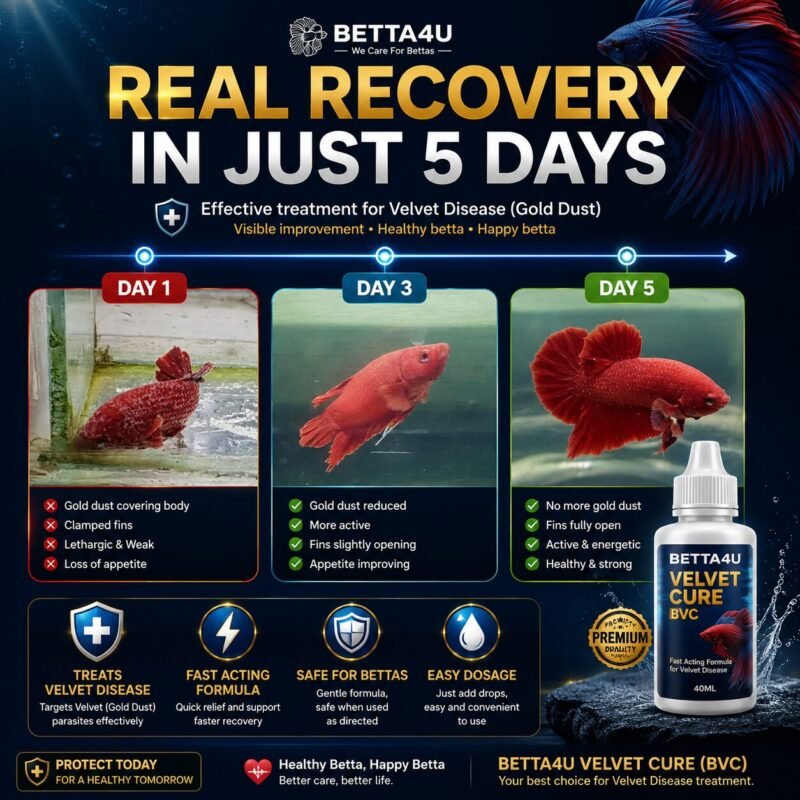
For effective treatment, use Betta4U Velvet Cure 40ml (BVC), specially formulated to help combat Velvet Disease in betta fish.
Tip: Early treatment provides the highest chance of successful recovery.
Learning what is Velvet Disease also helps fish keepers prevent future outbreaks. Good aquarium hygiene and proper quarantine procedures greatly reduce the risk of infection.
How to Prevent Velvet Disease
Prevention is always better than treatment.
Follow these good aquarium practices:
Quarantine new fish before introducing them to your main tank.
Maintain excellent water quality.
Avoid overcrowding.
Feed high-quality food.
Perform regular water changes.
Disinfect nets and aquarium tools between tanks.
Reduce unnecessary stress.
Healthy fish are naturally more resistant to disease.
Many beginners ask, what is Velvet Disease, because the symptoms often resemble other common betta fish illnesses. Identifying the disease correctly ensures that the appropriate treatment is used.
Frequently Asked Questions (FAQ)
Can Velvet Disease spread to other fish?
Yes. Velvet Disease is highly contagious and can quickly infect other fish in the same aquarium.
Is Velvet Disease caused by bacteria?
No. Velvet Disease is caused by microscopic parasitic organisms, not bacteria or fungi.
Can betta fish recover from Velvet Disease?
Yes. Early diagnosis, proper treatment, and good water quality greatly improve the chances of recovery.
How can I identify Velvet Disease?
The most common signs include:
Gold or rusty dust on the body
Clamped fins
Flashing behaviour
Rapid breathing
Loss of appetite
How long does treatment usually take?
Recovery time depends on how early the disease is detected and how severe the infection is. Following the treatment instructions consistently is important for the best outcome.
Final Thoughts
Velvet Disease is one of the most dangerous external parasites affecting betta fish, but it is also one of the most manageable when detected early. Learning to recognise the warning signs—such as clamped fins, a gold dust appearance, rapid breathing, and reduced activity—allows you to act before the infection becomes severe.
Maintaining clean water, reducing stress, and quarantining new fish are the best ways to prevent outbreaks. If your betta shows symptoms of Velvet Disease, prompt treatment with Betta4U Velvet Cure 40ml (BVC) can help support a faster recovery and protect the health of your fish.