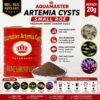

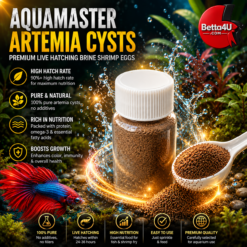
Premium AquaMaster Artemia Cysts 20g | Proven 90–95% Hatch Rate
Original price was: RM12.00.RM10.00Current price is: RM10.00.
AquaMaster Artemia Cysts 20g
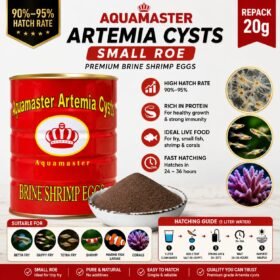
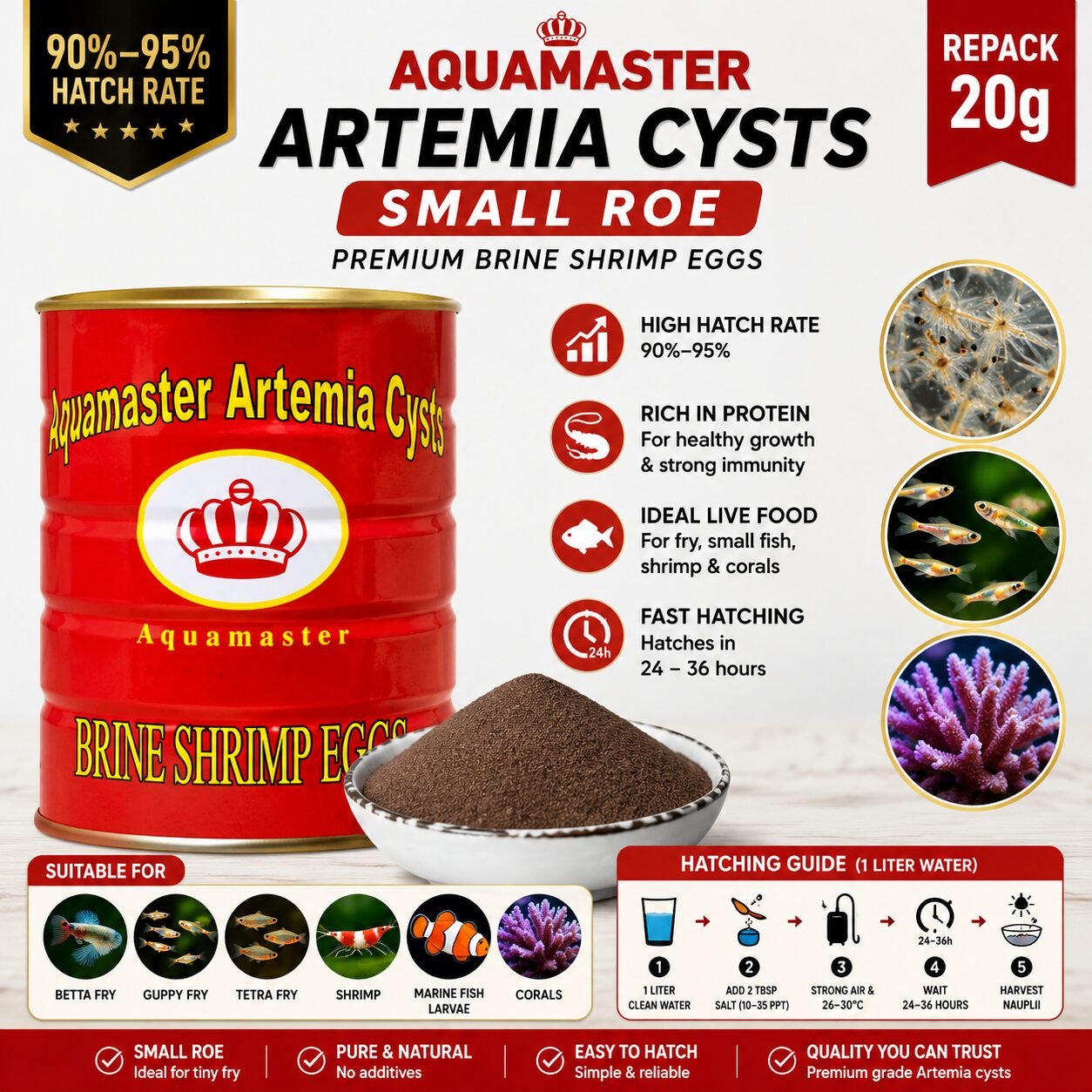
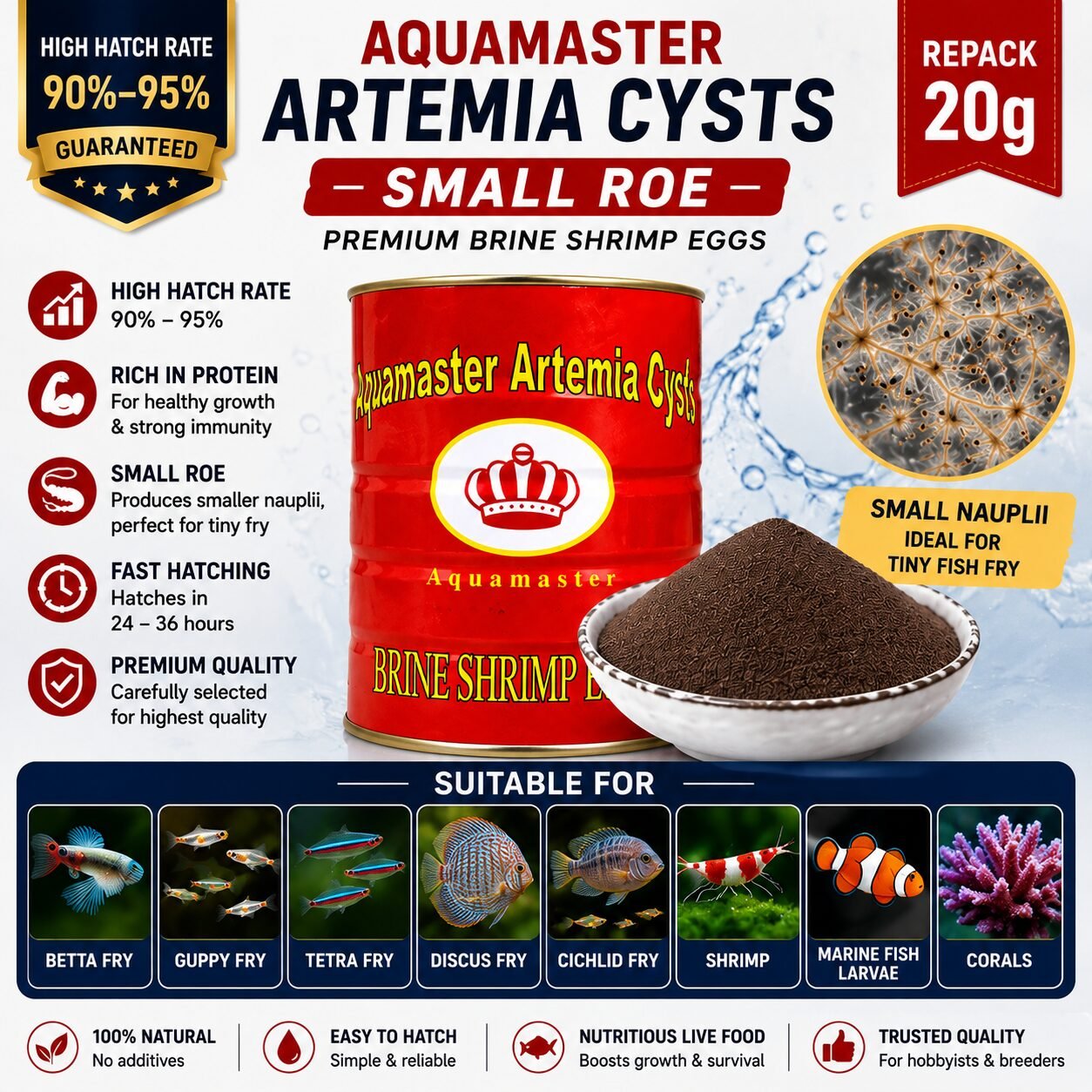
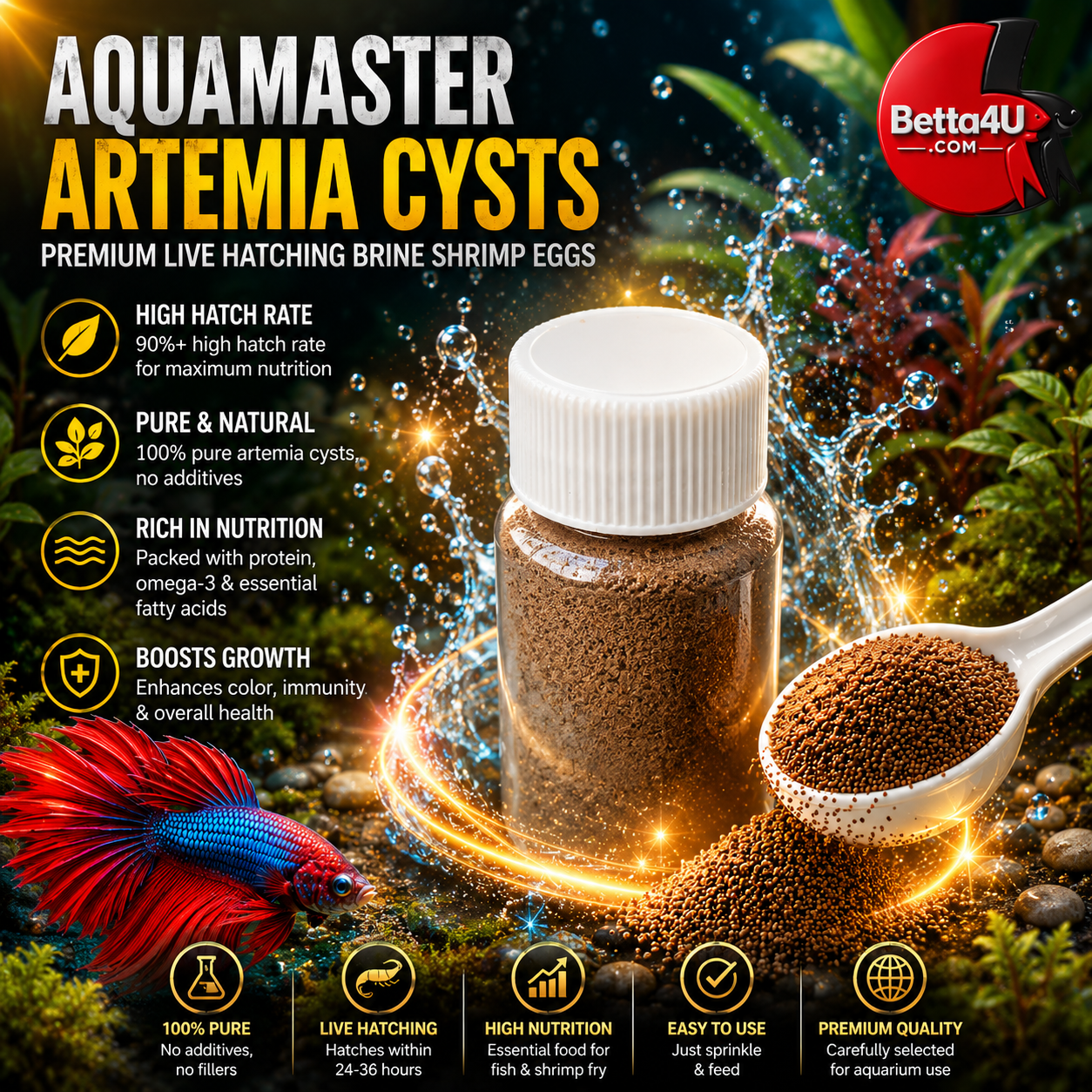
Give your fish fry the best possible start with AquaMaster Artemia Cysts 20g, premium-quality brine shrimp eggs that deliver an excellent 90%–95% hatch rate under proper hatching conditions. Newly hatched baby brine shrimp (Artemia nauplii) are one of the most nutritious live foods available, packed with protein to support rapid growth, stronger immunity, and better survival rates.
Suitable for betta fry, guppy fry, discus fry, cichlid fry, arowana fry, ornamental fish, shrimp, and marine corals, AquaMaster Artemia Cysts are trusted by hobbyists and professional breeders alike.
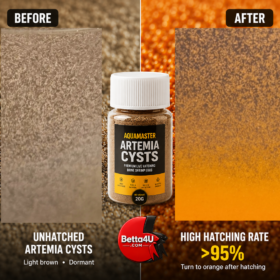
Why Choose AquaMaster Artemia Cysts?
✅ High hatch rate of 90%–95%
✅ Rich in natural protein for healthy growth
✅ Produces highly nutritious baby brine shrimp
✅ Ideal for freshwater and marine aquariums
✅ Easy to hatch within 24–36 hours
✅ Suitable for beginners and professional breeders
Benefits of Feeding Baby Brine Shrimp
Freshly hatched Artemia nauplii are considered one of the best first foods for young fish because they are:
- High in protein
- Easily digested
- Rich in essential nutrients
- Stimulate natural hunting behaviour
- Improve fry survival rates
- Encourage faster growth
- Enhance colour development
- Increase feeding response
Suitable For
- Betta fry
- Guppy fry
- Molly fry
- Platy fry
- Swordtail fry
- Discus fry
- Angelfish fry
- Cichlid fry
- Killifish fry
- Tetra fry
- Gourami fry
- Shrimp
- Marine fish larvae
- Reef corals
Hatching Guide
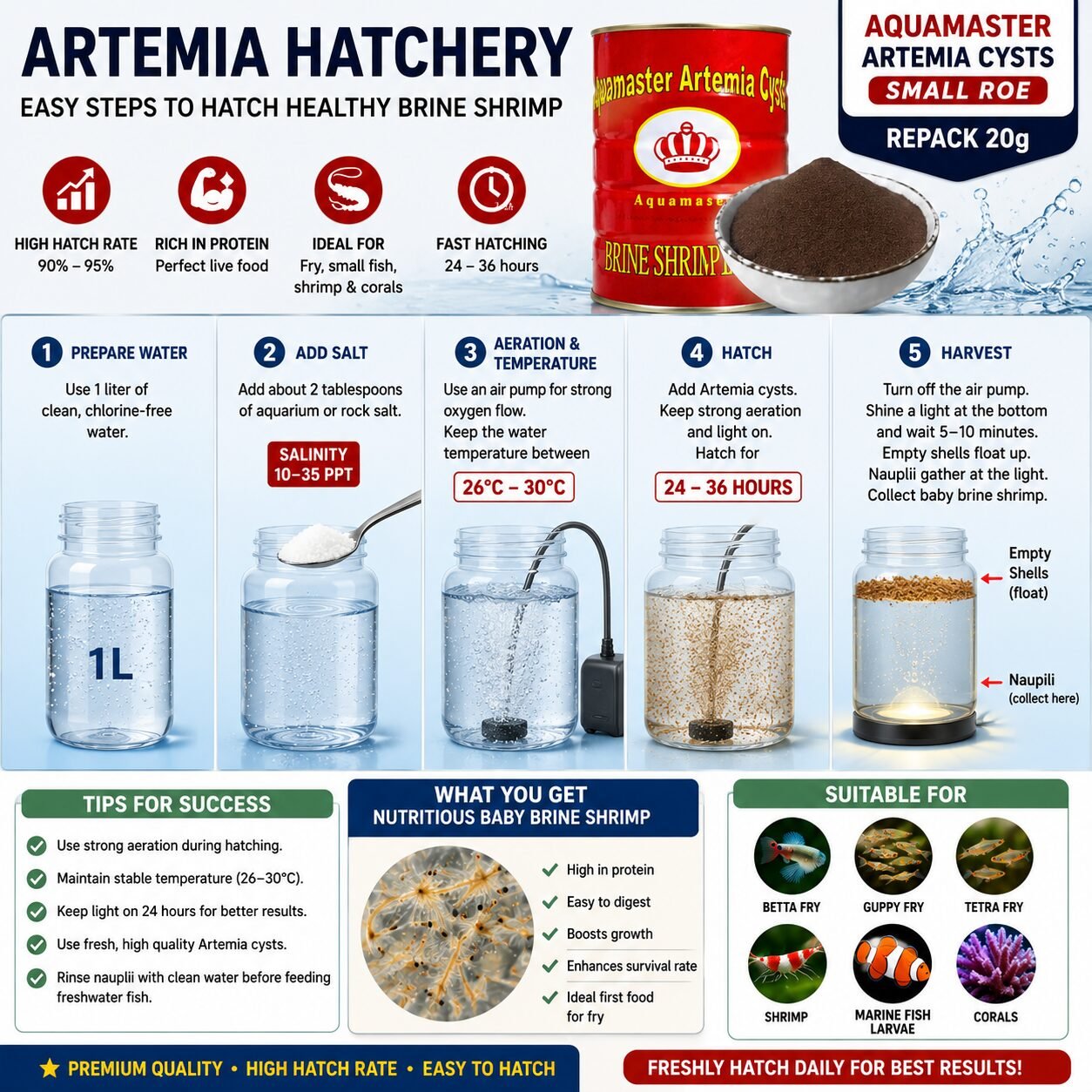
Step 1 – Prepare the Water
- Use 1 litre of clean, chlorine-free water.
Step 2 – Add Salt
- Add approximately 2 tablespoons of aquarium salt or rock salt
- Recommended salinity: 10–35 PPT
Step 3 – Aeration & Temperature
- Use a strong air pump to keep the eggs suspended.
- Maintain water temperature between 26°C and 30°C.
- Provide continuous lighting for better hatching results.
Step 4 – Wait
Allow the eggs to hatch for approximately:
24–36 hours
depending on temperature and water quality.
Step 5 – Harvest
- Turn off the air pump.
- Shine a light at the bottom of the container.
- Wait 5–10 minutes.
- Empty shells will float to the surface.
- Newly hatched Artemia will gather near the light.
- Collect the baby brine shrimp using a pipette or fine net.
Rinse with fresh water before feeding freshwater fish.
Feeding Instructions
Feed only the amount your fish can consume within a few minutes.
Freshly hatched Artemia contain the highest nutritional value during the first several hours after hatching.
For best results, hatch a fresh batch daily.
Product Specifications
Brand: AquaMaster
Product: Artemia Cysts
Pack Size: 20g (Repack)
Type: Premium Brine Shrimp Eggs
Expected Hatch Rate: 90%–95%
Hatching Time: 24–36 Hours
Storage: Store in a cool, dry place. Refrigeration is recommended after opening to maintain hatch quality.
Frequently Asked Questions (FAQ)
What are Artemia cysts?
Artemia cysts are dormant brine shrimp eggs that hatch into live baby brine shrimp when placed in saltwater under suitable conditions.
How long do they take to hatch?
Typically 24–36 hours, depending on water temperature, salinity, and aeration.
Can I feed the eggs directly to my fish?
No. The eggs should be hatched first before feeding. Newly hatched Artemia provide significantly better nutrition.
Do I need an air pump?
Yes. Strong aeration improves oxygen levels and keeps the eggs suspended, resulting in a higher hatch rate.
What temperature is best?
Maintain the water between 26°C and 30°C for optimal hatching.
Can I use table salt?
Aquarium salt or rock salt is recommended for the best hatch rate.
Why Buy From Betta4U?
At Betta4U, we carefully repack quality AquaMaster Artemia Cysts into convenient sizes suitable for hobbyists and breeders. Every pack is prepared to help you hatch nutritious live food for healthier fish and stronger fry.
Related Products
- Betta4U Booster
- Betta4U Protection
- Betta4U Pati Ketapang Booster
- Betta4U Anti-Chlorine
- Aquarium Air Pump
- Aquarium Salt
Want to learn more about Artemia? Read this comprehensive guide on Artemia (Brine Shrimp):
https://en.wikipedia.org/wiki/Artemia
| Weight | .1 kg |
|---|---|
| Dimensions | 6 × 6 × 6 cm |
| BBS size | Small Roe, Big Roe |
Related products


Product Category

Betta4U Products
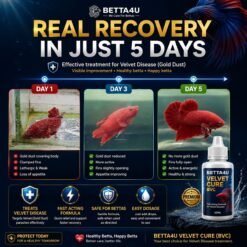
Betta4U Velvet Cure 40ml (BVC) – Fast & Effective Velvet Disease Treatment for Betta Fish
Product Category

Betta4U Products
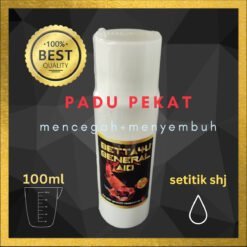
Betta4U General Aid 100ml: Fish Health & Transportation Solution
Product Category