
Jul
MAA Blog, Aquatic Science and Research
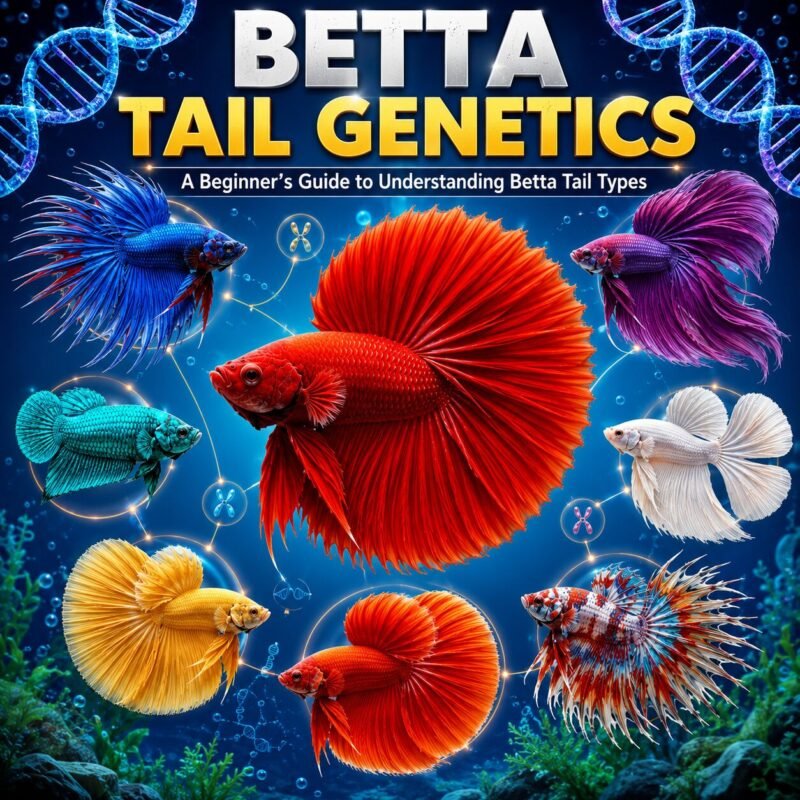
Betta Tail Genetics Explained: A Beginner’s Guide to Betta Tail Types
Betta Tail Genetics Explained: A Beginner’s Guide
One of the most exciting things about keeping betta fish is discovering the incredible variety of tail shapes. From the elegant Halfmoon to the spiky Crowntail, each tail type has its own unique beauty.
But have you ever wondered why two Halfmoon bettas don’t always produce Halfmoon babies? Or why a pair of Plakats can suddenly produce fish with unusually long fins?
The answer lies in betta tail genetics.
Fortunately, you don’t need to understand complicated genetic formulas to appreciate how it works. This guide explains the basics in simple language, making it perfect for hobbyists who simply want to understand why different tail types appear.
Why Learn About Betta Tail Genetics?
Understanding betta tail genetics helps you:
- Appreciate different betta varieties.
- Choose breeding pairs more wisely.
- Understand why offspring may look different from their parents.
- Avoid common myths about breeding.
Even experienced breeders cannot predict every baby perfectly because multiple genes work together to shape a betta’s fins.
What Determines a Betta’s Tail?
A betta’s tail isn’t controlled by just one gene.
Instead, several genes influence:
- Tail length
- Tail spread
- Ray branching
- Fin webbing
- Symmetry
- Dorsal fin size
- Anal fin shape
Think of it like building a house.
One gene decides the roof, another decides the windows, another decides the doors.
Only when everything comes together do you get the finished house—in this case, the beautiful tail of your betta.
Long Fin vs Short Fin (Plakat)
One of the easiest genetic differences to understand is long-fin versus short-fin bettas.
Long Fin Bettas
These include:
- Halfmoon
- Veiltail
- Crowntail
- Rosetail
- Delta
- Super Delta
Their flowing fins are what most people imagine when they think of bettas.
Plakat Bettas
Plakats have naturally short fins.
They are:
- Faster swimmers
- More active
- Less likely to tear their fins
- Similar to wild bettas
Today, many breeders prefer Halfmoon Plakats because they combine the wide tail spread of a Halfmoon with the strength of short fins.
Example 1
Long-fin male × Long-fin female
Possible result:
Most fry will have long fins, but the exact tail shape can vary.
Some may become Halfmoons.
Some may become Super Deltas.
Others may develop less-than-perfect spreads.
Example 2
Long-fin × Plakat
Many fry may carry genes for both long and short fins.
Depending on the parents’ genetics, the offspring may not all look alike.
Some breeders intentionally use this cross to improve body shape before selecting future generations.
Understanding Halfmoon Bettas
The Halfmoon is one of the world’s most popular betta tail types.
Its tail opens to approximately 180 degrees, forming a beautiful semicircle.
Characteristics include:
- Wide tail spread
- Balanced dorsal and anal fins
- Symmetrical appearance
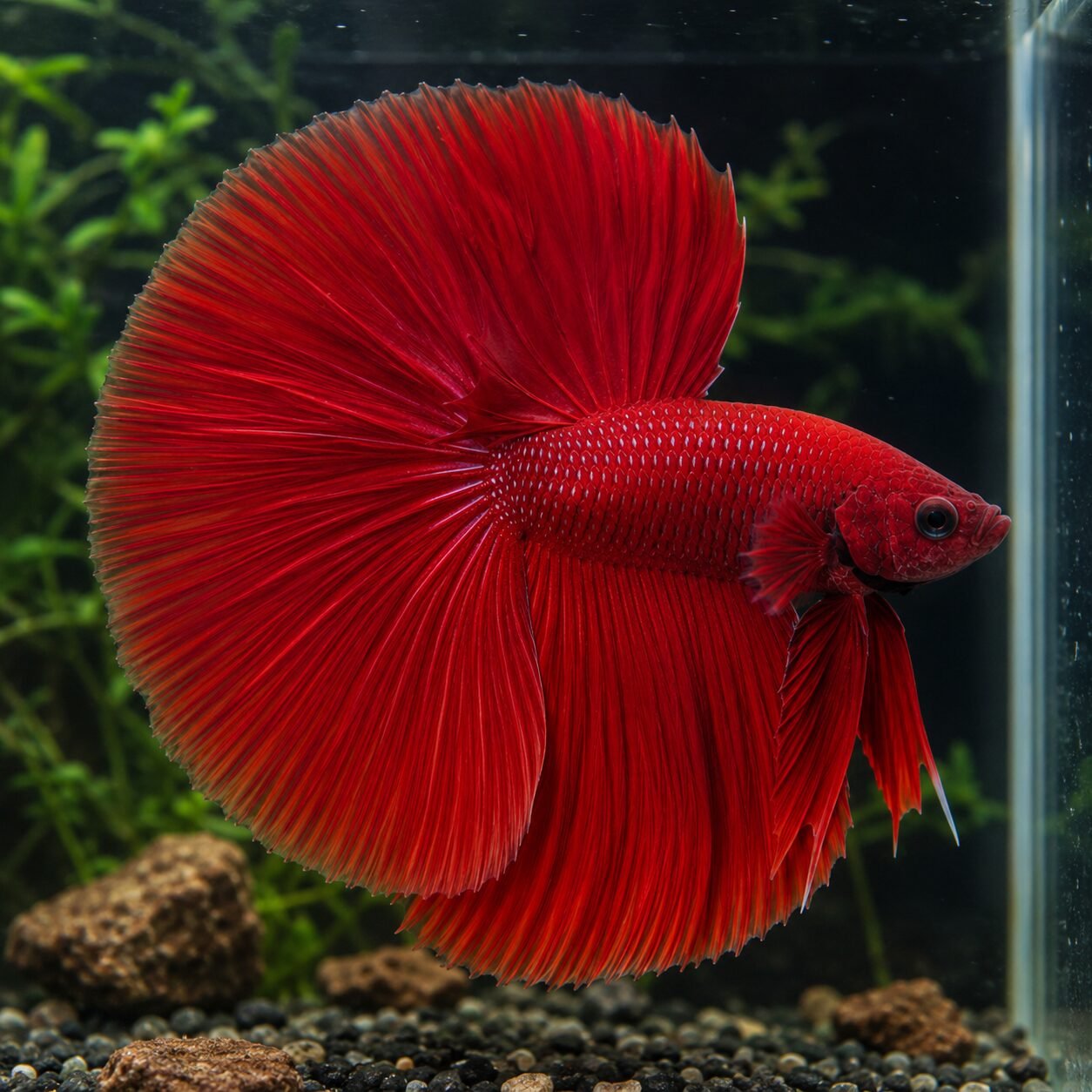
However, achieving a perfect Halfmoon requires multiple genes working together.
This is why breeding two Halfmoons doesn’t always produce an entire spawn of perfect Halfmoons.
Delta and Super Delta
These tail types look similar to Halfmoons but have a smaller spread.
Delta
Tail opens less than 180°.
Super Delta
Tail spread is wider than Delta but doesn’t quite reach Halfmoon.
Think of them as stages leading toward a perfect Halfmoon.
Veiltail
The Veiltail is one of the oldest domesticated betta varieties.
Its tail flows downward instead of opening into a wide fan.
Although Veiltails are common in pet stores, they remain popular because:
- They’re hardy.
- They’re inexpensive.
- They have graceful movement.
Crowntail
Crowntails are easy to recognize because their fin rays extend beyond the webbing, creating a crown-like appearance.
Instead of a smooth edge, the fins have pointed spikes.
The amount of webbing reduction varies, so not every Crowntail looks identical.
Double Tail
The Double Tail carries a special genetic trait that splits the caudal fin into two lobes.
Besides the split tail, Double Tails often have:
- Larger dorsal fins
- Shorter bodies
- Different body proportions
Breeders use Double Tail genetics carefully because the trait can also increase the chance of body deformities if not managed responsibly.
Rosetail and Feathertail
These are highly branched versions of the Halfmoon.
Extra branching creates:
- Ruffled edges
- Dense fins
- Flower-like appearance
Although visually impressive, excessive branching may make swimming more difficult and can increase the risk of fin damage.
Why One Spawn Produces Different Tail Types
This surprises many beginners.
Imagine two parents each carrying hidden genetic instructions.
Every baby receives a random combination.
As a result, one spawn may include:
- Halfmoons
- Super Deltas
- Deltas
- Imperfect spreads
The same principle applies to colours and patterns.
Nature enjoys variety.
Tail Type Is More Than Just the Tail
Many beginners focus only on the caudal fin.
Judges and experienced breeders also evaluate:
- Body shape
- Dorsal fin
- Anal fin
- Balance
- Symmetry
- Swimming posture
A perfect tail alone does not create a show-quality betta.
Common Beginner Misunderstandings
“Two Halfmoons always produce Halfmoons.”
Not necessarily.
Hidden genes can produce different tail spreads.
“Long fins are always better.”
Not true.
Many hobbyists love Plakats for their strength and active behaviour.
“Every Crowntail looks the same.”
Crowntails vary greatly depending on ray extension and web reduction.
Conclusion
Betta tail genetics may seem complicated at first, but the basic idea is simple.
Multiple genes work together to shape every fin, which explains why no two bettas are exactly alike.
Whether you prefer the graceful Veiltail, the dramatic Halfmoon, the elegant Crowntail, or the energetic Plakat, understanding the basics of genetics makes the hobby even more enjoyable.
The best way to learn is by observing different bettas and, if you decide to breed them, keeping records of each generation. Over time, you’ll start to recognize how tail traits are inherited and appreciate the amazing diversity that makes bettas one of the world’s most fascinating ornamental fish.
Tail Type Comparison
| Tail Type | Appearance | Best Known For |
|---|---|---|
| Halfmoon | 180° fan-shaped tail | Show-quality symmetry |
| Super Delta | Wide tail, less than 180° | Nearly Halfmoon appearance |
| Delta | Moderate fan shape | Beginner-friendly |
| Veiltail | Downward flowing tail | Classic pet store betta |
| Crowntail | Spiky fin rays | Distinctive crown-like fins |
| Plakat | Short fins | Strong swimmer and active |
| Double Tail | Split caudal fin | Large dorsal fin |
| Rosetail | Heavy branching | Full, flower-like fins |
Suggested Internal Links (Betta4U)
Link this article to relevant pages on your website, such as:
- Betta Fish Collection
- Betta Breeding Equipment
- Live Aquarium Plants
- Betta Food
- Indian Almond Leaves
- Aquarium Filters
These internal links can help readers discover related products while strengthening your site’s SEO.
Suggested Outbound References
- Original genetics article: http://www.bettaterritory.nl/BT-AABtailtypegenetics.htm
- International Betta Congress (IBC): https://www.ibcbettas.org/
- Wikipedia – Siamese Fighting Fish: https://en.wikipedia.org/wiki/Siamese_fighting_fish
Frequently Asked Questions
Can two Halfmoon bettas produce non-Halfmoon fry?
Yes. Tail shape is influenced by multiple genes, so offspring may include Halfmoon, Super Delta, Delta, or other variations depending on the parents’ genetics.
Which tail type is best for beginners?
Veiltails and Plakats are often recommended because they are hardy, active, and generally less prone to fin damage than long-finned varieties.
Why do Crowntails have spiky fins?
Crowntails have reduced webbing between the fin rays, leaving the rays extended and creating their signature crown-like appearance.
Is a Double Tail just a split tail?
No. Double Tail bettas also tend to have a larger dorsal fin and different body proportions, making them distinct from other tail types.