

Jun
MAA Blog, Aquatic Life Care
5 Hilarious Betta Fish Behaviours Every Owner Should Know
Betta Fish Behaviours…
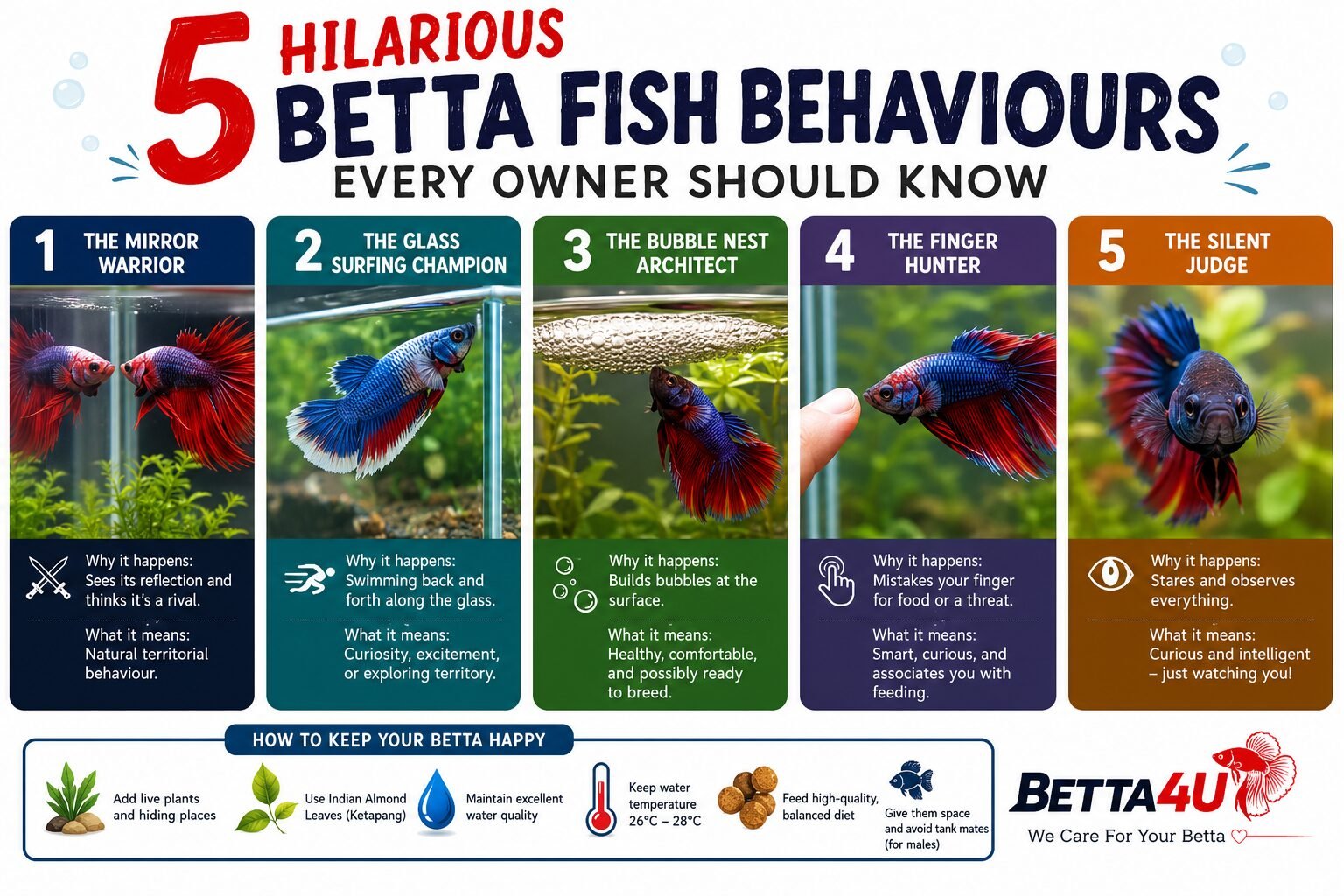
5 Betta Fish Behaviours
Have you ever caught your Betta fish staring at you like it’s plotting world domination?
Or watched it flare its fins at its own reflection as if preparing for the biggest fight of its life?
If so, congratulations—you own a Betta!
Betta fish (Betta splendens) are among the most intelligent, expressive, and entertaining freshwater fish in the aquarium hobby. Their unique personalities are one of the reasons millions of fishkeepers around the world fall in love with them.
While some of their behaviours may seem funny—or even a little dramatic—they’re actually natural instincts developed in the wild. Understanding these behaviours helps you distinguish between what’s perfectly normal and what could indicate stress or illness.
Let’s dive into five hilarious Betta fish behaviours every owner should know.
Betta Fish Behaviours 1/5. The Mirror Warrior 🪞
One moment your Betta is peacefully swimming around the tank.
The next…
Its fins are fully spread.
Gill covers are flared.
Body colour becomes more intense.
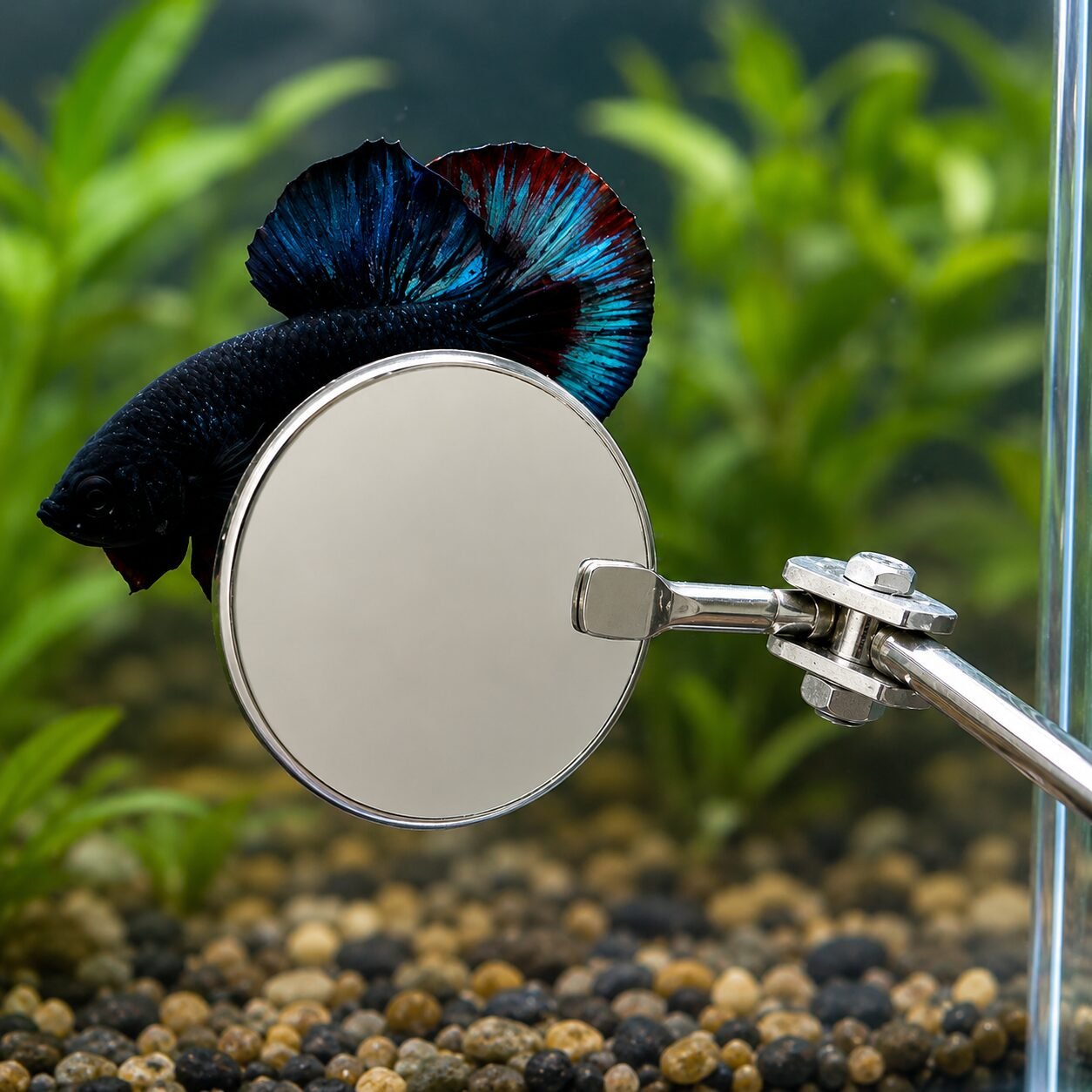
It charges at the aquarium glass.
Sound familiar?
Your Betta has just spotted its own reflection and believes another male has invaded its territory.
Why do Bettas flare?
Male Bettas are naturally territorial fish. In the wild, they defend small territories against rival males. When they see another Betta—or even their own reflection—they instinctively prepare for battle.
Is flaring healthy?
Yes!
Occasional flaring is actually beneficial because it:
- Exercises muscles
- Keeps fins fully extended
- Stimulates natural behaviour
- Builds confidence
However, continuous flaring for hours every day can lead to unnecessary stress.
Betta4U Tip
Allow mirror training for only 2–5 minutes, two or three times a week.
Betta Fish Behaviours 2/5: The Glass Surfing Champion 🏊
Does your Betta swim from one end of the aquarium to the other…
Again.
And again.
And again.
This behaviour is commonly called glass surfing.
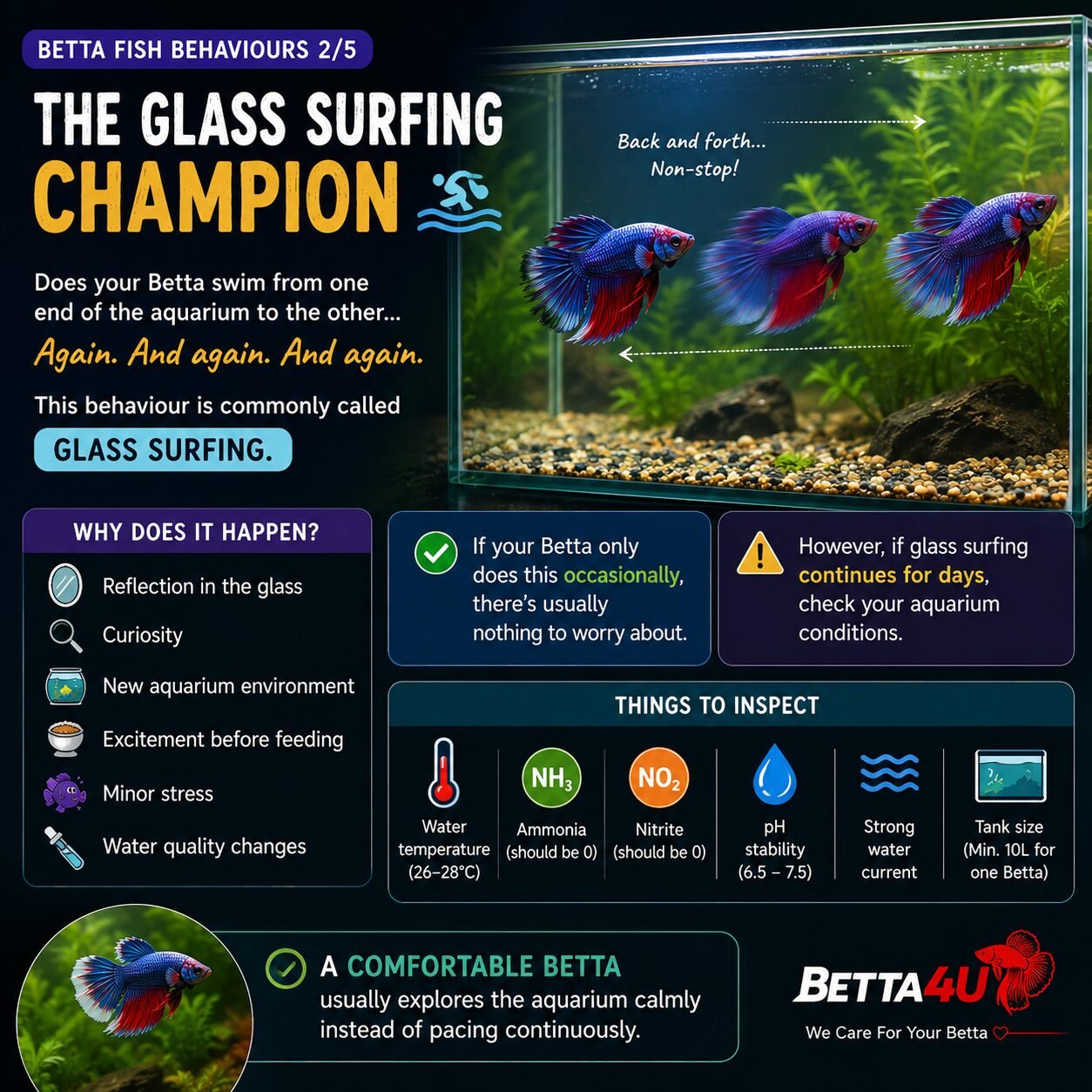
Why does it happen?
There are several possible reasons:
- Reflection in the glass
- Curiosity
- New aquarium environment
- Excitement before feeding
- Minor stress
- Water quality changes
If your Betta only does this occasionally, there’s usually nothing to worry about.
However, if glass surfing continues for days, check your aquarium conditions.
Things to inspect
- Water temperature (26–28°C)
- Ammonia
- Nitrite
- pH stability
- Strong water current
- Tank size
A comfortable Betta usually explores the aquarium calmly instead of pacing continuously.
Betta Fish Behaviours 3/5: The Bubble Nest Architect 🫧
One morning you notice hundreds of tiny bubbles floating on the water surface.
Don’t panic.
Your Betta isn’t making a mess.
He’s building a bubble nest.
Male Bettas create bubble nests as part of their breeding instinct. Even without a female nearby, healthy males often build nests when they feel comfortable.
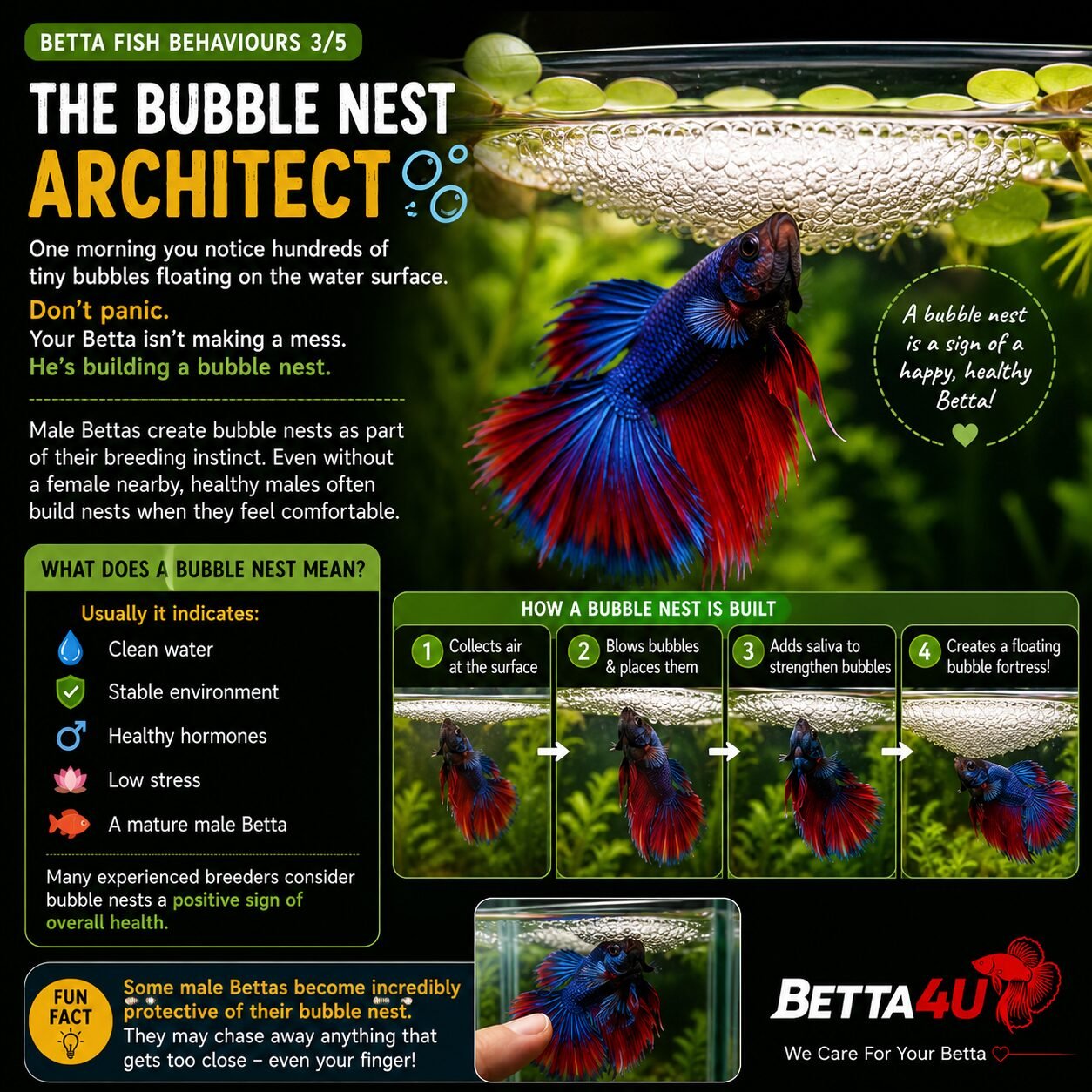
What does a bubble nest mean?
Usually it indicates:
- Clean water
- Stable environment
- Healthy hormones
- Low stress
- A mature male Betta
Many experienced breeders consider bubble nests a positive sign of overall health.
Fun Fact
Some male Bettas become incredibly protective of their bubble nests and may chase away anything that comes too close—even your finger!
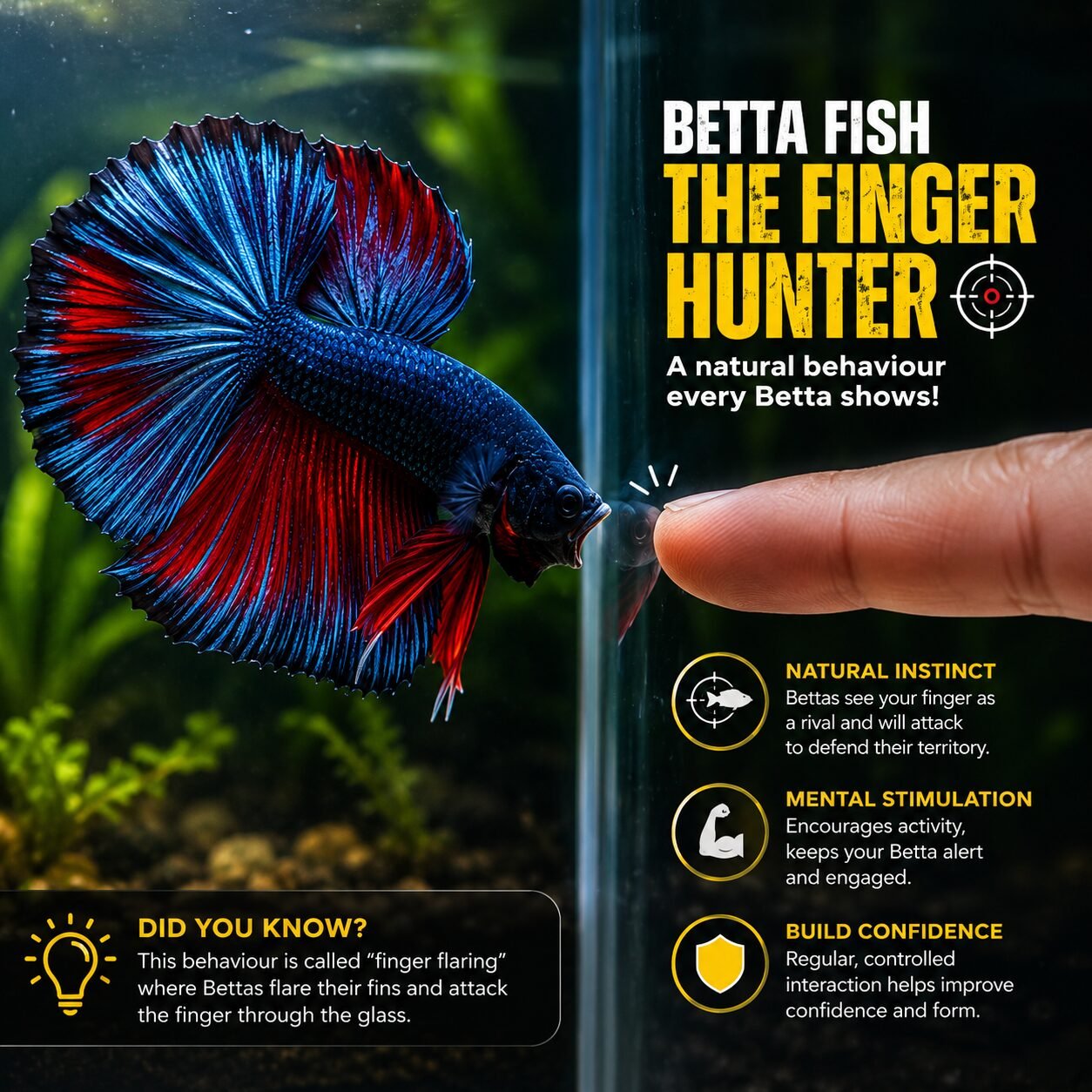
Betta Fish Behaviours 4/5: The Finger Hunter 👆
Try placing your finger against the aquarium glass.
Many Bettas immediately rush over.
Some flare.
Some follow every movement.
Some even try to bite.
Why?
Because Bettas are surprisingly intelligent.
They quickly learn that moving objects often mean food.
Over time, many Bettas recognise their owner’s face, voice, and feeding routine.
Some even perform little “happy dances” whenever their favourite human walks into the room.
Can Bettas recognise people?
Research and countless hobbyist observations suggest Bettas can distinguish familiar people from strangers, particularly those who regularly feed them.
Your Betta isn’t being aggressive.
It’s simply saying,
“Are you bringing dinner?”
Betta Fish Behaviours 5/5: The Silent Judge 👀
Perhaps the funniest behaviour of all.
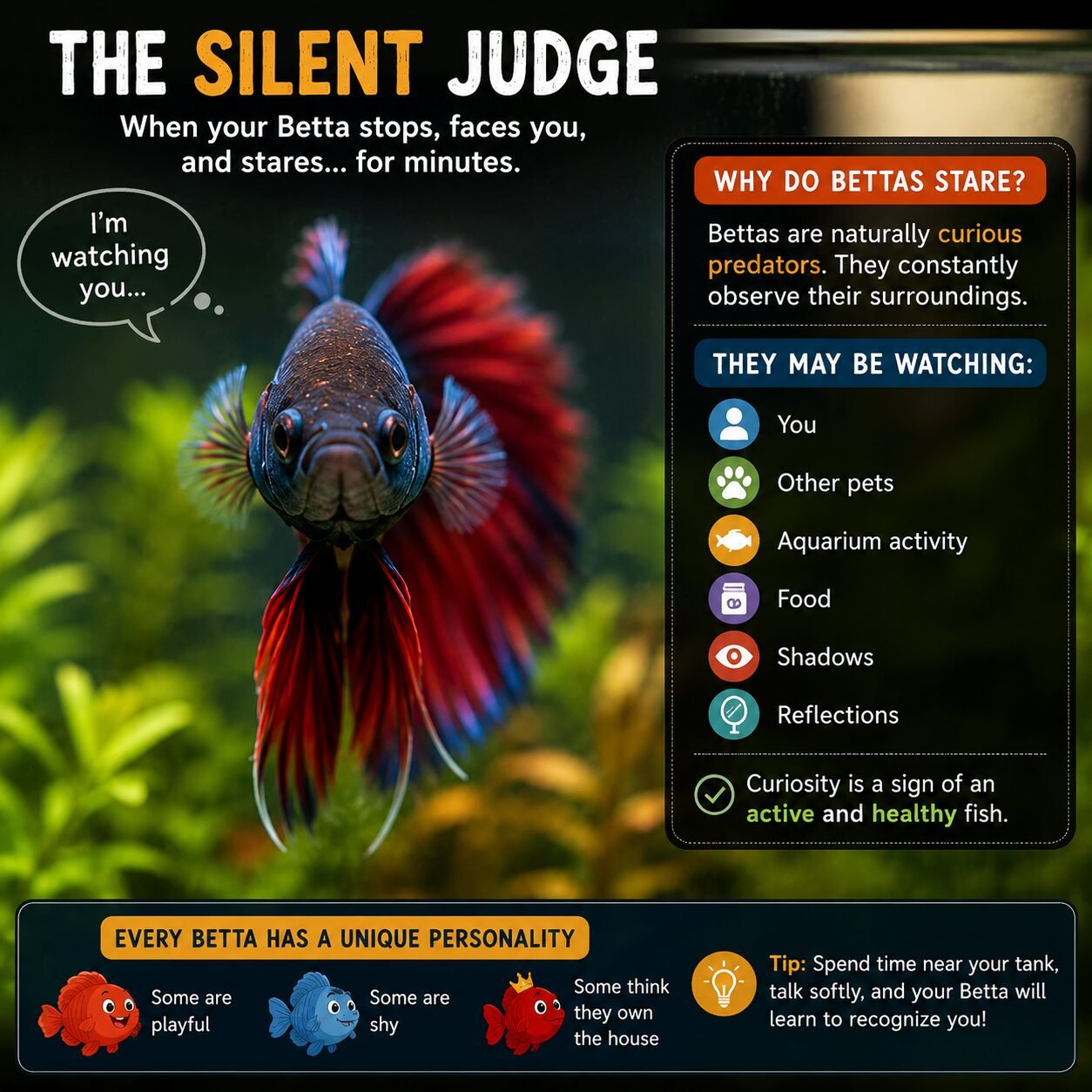
Your Betta stops swimming.
Faces you.
Doesn’t move.
Doesn’t blink.
Just…
Stares.
For several minutes.
It almost feels like you’re being judged.
In reality, Bettas are naturally curious predators.
They’re constantly observing movement around them.
Your Betta may be watching:
- You
- Other pets
- Aquarium activity
- Food
- Shadows
- Reflections
Curiosity is a sign of an active and healthy fish.
Many owners even describe their Bettas as having unique personalities—some playful, some shy, and some that seem convinced they own the house.
When Should You Actually Be Concerned?
While these dramatic behaviours are usually normal, there are times when they may indicate a problem.
Watch for warning signs such as:
- Loss of appetite
- Constant hiding
- Torn or deteriorating fins
- Heavy breathing
- Pale colours
- Clamped fins
- Lying on the bottom for long periods
- Floating sideways
- Difficulty swimming
If several of these symptoms appear together, test your water immediately and inspect your Betta for signs of disease.
How to Keep Your Betta Happy
A happy Betta is an active Betta.
Here are a few simple ways to create an ideal environment:
🌿 Add Live Plants
Plants provide shelter, reduce stress, and create a more natural habitat.
🍃 Use Indian Almond Leaves (Ketapang)
Ketapang leaves release beneficial tannins that mimic the Betta’s natural blackwater environment.
🪵 Include Hiding Places
Small caves, driftwood, and aquarium decorations help Bettas feel secure.
💧 Maintain Excellent Water Quality
Perform regular water changes and keep ammonia and nitrite at zero.
🌡 Keep Water Warm
The ideal temperature is between 26°C and 28°C.
🍽 Feed a High-Quality Diet
A varied diet rich in protein supports vibrant colours, healthy fins, and strong immunity.
Every Betta Has Its Own Personality
One of the greatest joys of keeping Bettas is discovering their individual personalities.
Some are fearless.
Some are curious.
Some are incredibly lazy.
Others behave like tiny underwater superheroes defending their kingdom from invisible enemies.
Their dramatic behaviour isn’t a flaw—it’s part of what makes them one of the most beloved aquarium fish in the world.
The more you understand your Betta’s natural instincts, the better you’ll be able to provide a healthy, enriching environment where it can truly thrive.
So the next time your Betta flares at its reflection or stares at you like royalty, remember:
It’s not being difficult.
It’s simply being a Betta.
Frequently Asked Questions
Why does my Betta fish flare at the glass?
Your Betta is likely reacting to its reflection or another perceived rival. Occasional flaring is a natural territorial behaviour and can even provide healthy exercise.
Is glass surfing normal for Betta fish?
Yes, occasional glass surfing is normal, especially in new aquariums or during feeding time. Persistent pacing may indicate stress or water quality issues.
Why is my Betta building a bubble nest?
Male Bettas build bubble nests when they are healthy, mature, and comfortable in their environment. It is generally considered a positive sign.
Can Betta fish recognise their owners?
Many Bettas learn to associate their owners with feeding and often respond differently to familiar people than to strangers.
How can I reduce stress in my Betta fish?
Maintain clean, warm water, provide live plants and hiding places, avoid strong currents, and feed a balanced, high-quality diet.
Conclusion
Betta fish are far more than beautiful aquarium pets—they’re intelligent, expressive, and endlessly entertaining companions. Their flaring, bubble nest building, curious stares, and playful interactions are all part of their natural behaviour.
By learning to interpret these actions, you’ll not only enjoy your Betta’s unique personality even more but also recognise early signs if something isn’t right.
At Betta4U, we believe that understanding your fish is the first step toward providing exceptional care. Give your Betta a clean, well-planted aquarium, quality nutrition, and a stress-free environment, and it will reward you with vibrant colours, fascinating behaviour, and years of enjoyment.